
Olezarsen Lowers Triglycerides In Severe Hypertriglyceridemia
Key Takeaways
- Placebo-adjusted triglyceride reductions at 6 months were greater with monthly olezarsen than with placebo in both trials.
- Acute pancreatitis was reported less often with olezarsen than with placebo across the two studies.
- Overall adverse-event frequency was similar across groups, while liver-enzyme elevations and thrombocytopenia were more common with 80 mg and hepatic fat fraction increased in a dose-dependent pattern.
Researchers conducted two double-blind, randomized, placebo-controlled trials, CORE-TIMI 72a and CORE2-TIMI 72b, in patients with severe hypertriglyceridemia. Participants were assigned in a 1:1:1 ratio to monthly olezarsen 50 mg, olezarsen 80 mg, or placebo for 12 months in each study. The primary analysis included 1061 patients overall, with 617 enrolled in CORE-TIMI 72a and 444 in CORE2-TIMI 72b. The primary endpoint was placebo-adjusted percent change in triglyceride level at 6 months. Olezarsen is an antisense oligonucleotide targeting apolipoprotein C-III messenger RNA.
At 6 months in CORE-TIMI 72a, placebo-adjusted least-squares mean triglyceride change was -62.9 percentage points with 50 mg and -72.2 percentage points with 80 mg. In CORE2-TIMI 72b, the corresponding changes were -49.2 percentage points with 50 mg and -54.5 percentage points with 80 mg. All four comparisons with placebo met P<0.001 at 6 months. Decreases in triglycerides, apolipoprotein C-III, remnant cholesterol, and non-HDL cholesterol were also greater with olezarsen than with placebo across the reported assessments. Secondary lipid outcomes included triglycerides at 12 months and apolipoprotein C-III, remnant cholesterol, and non-HDL cholesterol at 6 and 12 months, with directionally consistent changes in both studies.
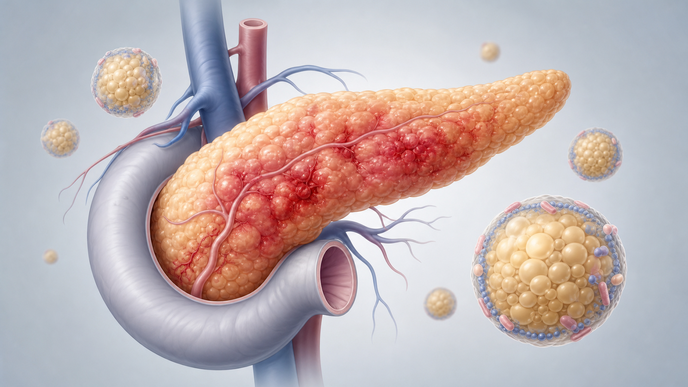
Across the two trials, acute pancreatitis incidence was lower with olezarsen than with placebo, with a mean rate ratio of 0.15. The 95% confidence interval was 0.05 to 0.40, and P was less than 0.001 overall. The incidence of any adverse events was similar across groups over the study period. Elevations in liver-enzyme levels and thrombocytopenia were more common with the 80-mg dose of olezarsen, and hepatic fat fraction increased in a dose-dependent pattern. These safety patterns were observed during the 6- to 12-month trial period.