
Measles and Varicella Gaps at Pediatric Transplantation
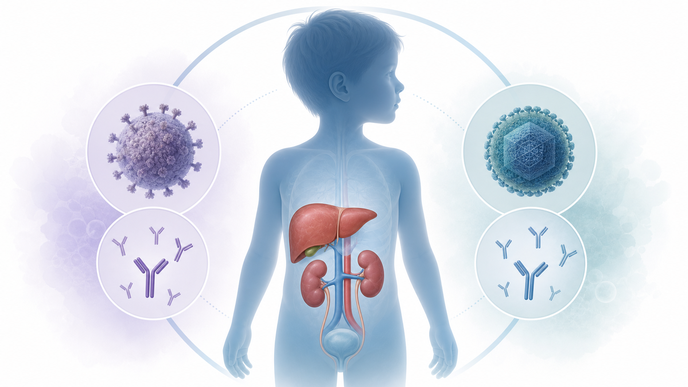
Key Takeaways
- At a Cincinnati pediatric transplant center, some recipients lacked age-specified measles or varicella vaccination at transplantation.
- Some children classified as completely vaccinated at evaluation became incompletely vaccinated as they reached older dose categories.
- Kidney recipients more often met vaccination criteria than liver or heart recipients, while eligible infants had particularly low completion.
- Some recipients meeting vaccination criteria had no detectable pretransplant antibody to the corresponding virus.
- Among tested younger children, varicella seropositivity was 67.7% (44/65) after one dose versus 95.5% (21/22) after two doses.
In Cetin and colleagues’ Transplant International cohort study, investigators retrospectively followed 421 recipients of a first liver, kidney, heart, lung, intestinal, or multivisceral solid organ transplantation (SOT) at Cincinnati Children’s Hospital Medical Center, a pediatric transplant center, from January 1, 2018, through December 31, 2024. Ages at transplantation ranged from 0.6 to 38.4 years. They reassessed the same recipients at initial evaluation, listing, and transplantation. Complete measles vaccination required one measles, mumps, and rubella (MMR) dose from 6 months to younger than 4 years, and at least two doses from age 4; varicella required one dose from 9 months to younger than 4 years, then at least two. Children below a vaccine’s minimum age counted as complete at that milestone; eligibility and dose requirements were reconsidered at each assessment. One dose before age 4 did not signify completion of a two-dose series. Investigators also examined a stricter two-dose definition for children aged 1 to younger than 4 years. They compared documented doses with available clinical pretransplant immunoglobulin G (IgG) testing, recorded untested status as unknown, and excluded tests before 12 months from comparative serology analyses.
At transplantation, 81/421 recipients (19.2%) had incomplete age-specified varicella vaccination and 91/421 (21.6%) had incomplete measles vaccination. Between evaluation and transplantation, 30/421 (7.1%) changed from complete to incomplete for varicella and 36/421 (8.6%) for measles, primarily as children entered older dose categories rather than losing administered doses. Some recipients changed from incomplete to complete. Overall completion rose by listing but fell by transplantation; vaccination was particularly uncommon among eligible infants. Kidney recipients more often met completion criteria than liver or heart recipients. Younger age and non-kidney transplant type remained associated with incomplete vaccination after adjustment.
Pretransplant IgG results were available for 397/421 recipients (94.3%) for varicella and 244/421 (57.9%) for measles. Among recipients meeting the relevant vaccination criteria who had serology available, 217/284 (76.4%) were varicella-seropositive and 23.6% were seronegative; 167/192 (87%) were measles-seropositive and 13% were seronegative. Among tested children aged 1 to younger than 4 years, varicella seropositivity was 67.7% (44/65) after one dose versus 95.5% (21/22) after two doses (p = 0.010). Antibody detection and vaccination records captured different aspects of pretransplant status, without establishing clinical protection.
The retrospective findings came from one center, where outside vaccination histories may have been incomplete and reasons for missed vaccination were not routinely recorded. Routine measles IgG screening began only in the final two study years, limiting the available measles antibody data. Cellular immunity was not measured, so a seronegative test did not establish lack of protection. Renal function and dialysis were not analyzed against antibody status, leaving organ-specific antibody differences unexplained by those factors. Changes in recorded vaccination status did not test whether monitoring or additional doses improved outcomes.
Cetin and colleagues identified both age-sensitive changes in vaccination completion and antibody-negative results among some recipients who met completion criteria. They interpreted the shift between evaluation and transplantation as reflecting children’s movement into new age-based dose categories, alongside a distinction between documented vaccination and detectable antibody.
Clinician Questions
Did requiring two measles or varicella vaccine doses before age 4 change which pediatric transplant recipients were incompletely vaccinated?
When Cetin and colleagues applied a stricter two-dose definition to recipients aged 1 to younger than 4 years before SOT, younger age and non-kidney transplant type remained associated with incomplete measles and varicella vaccination in adjusted analyses; these associations did not establish why doses were missed.
How were equivocal measles IgG test results classified before pediatric solid organ transplantation?
For pretransplant measles testing at the Cincinnati pediatric center, IgG of at least 16.5 AU/mL counted as positive, while an equivocal result from 13.5 to 16.5 AU/mL was classified as seronegative. An unperformed test was recorded as unknown, not negative.