
Low-Fat Vegan Diet Lowered Liver Fat in Type 2 Diabetes
Key Takeaways
- Among adults with type 2 diabetes in a Washington, DC trial, body weight and liver lipid content were lower during low-fat vegan eating.
- Fasting insulin resistance and tissue AGE accumulation declined, while postprandial insulin sensitivity and modeled beta-cell measures increased.
- Muscle intramyocellular lipid content did not change significantly.
In Washington, District of Columbia, 25 adults with type 2 diabetes began an uncontrolled, single-arm 16-week low-fat vegan diet trial, and 24 completed it. Treated with diet and/or permitted oral agents, participants ate ad libitum without supplied meals or a calorie target; they received weekly group support, dietitian counseling, and vitamin B12. Baseline and follow-up assessments included body composition by dual-energy X-ray absorptiometry (DXA); liver and soleus-muscle lipids by proton magnetic resonance spectroscopy; and tissue advanced glycation end products (AGEs) by skin fluorescence. Investigators assessed fasting homeostasis model assessment of insulin resistance (HOMA-IR), postprandial oral glucose insulin sensitivity (OGIS) and predicted insulin sensitivity index (PREDIM), and beta-cell function modeled from mixed-meal glucose and C-peptide data. Diet records, activity questionnaires, and medication tracking supplemented paired analyses of outcome-specific completer data; there was no comparator.
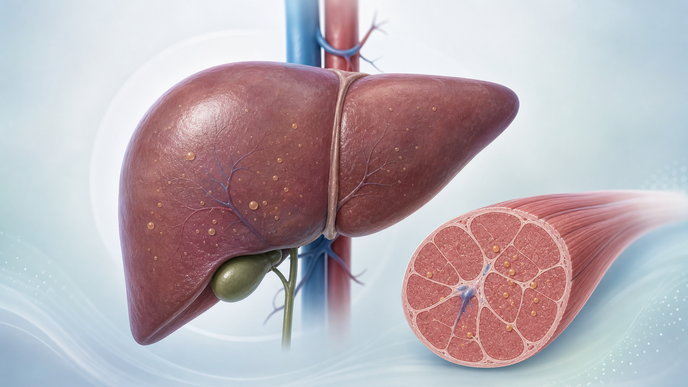
Body weight fell by −6.0 kg, and hepatocellular lipid content fell by −33% (95% confidence interval [CI] −48.7 to −17.3). Fat mass and visceral fat declined, but lean mass fell too. Neither intramyocellular nor extramyocellular muscle lipids changed significantly.
Postprandial PREDIM increased by +1.3 mg/min/kg (95% CI +0.6 to +2.1); modeled beta-cell glucose sensitivity increased by +56.0 pmol/min/m²/mM. Fasting HOMA-IR and skin AGE scores declined, while postprandial OGIS rose. Modeled insulin secretion at specified glucose concentrations, rate sensitivity, and potentiation increased. Hemoglobin A1c (HbA1c), total cholesterol, and low-density lipoprotein cholesterol declined.
Despite no prescribed deficit, lower self-reported energy intake accompanied weight loss. Some metformin doses were reduced or stopped; no glucose-lowering drugs were started or increased, and physical activity fell slightly. Lean mass also fell. The investigators noted that the uncontrolled design cannot establish causation or isolate diet composition from reduced energy intake and weight loss. A small, selected, health-conscious sample, self-reported intake, and unadjusted secondary comparisons limit interpretation. A laboratory error left 21 participants with complete glucose-tolerance data; analyses used outcome-specific completers.
The authors concluded that the ad libitum period coincided with less visceral and liver fat and lower tissue AGE accumulation and insulin resistance, alongside higher insulin sensitivity and modeled beta-cell function. They called for controlled comparisons to disentangle diet composition, energy intake, and weight loss.
Clinician Questions
Which adults with type 2 diabetes were eligible?
Eligible adults had HbA1c 6.5%–10.5%, BMI 26–40 kg/m², and treatment with diet and/or permitted oral agents. Those using insulin, sulfonylureas, or weight-loss medications including incretin-based therapies, or already eating vegan, were excluded.
Why was C-peptide used to model beta-cell function?
After a standard mixed meal, glucose and C-peptide samples informed modeled insulin secretion. C-peptide is secreted with insulin but is not removed by the liver as circulating insulin is; the resulting estimates do not establish lasting beta-cell recovery.