
Long-Term Dupilumab Use Linked to Delayed Relapse in AD: Study
Key Takeaways
- Dupilumab demonstrated sustained efficacy and favorable safety outcomes in patients with moderate-to-severe atopic dermatitis in a real-world clinical setting.
- Long-term continuous treatment was associated with significantly longer relapse-free periods compared with tapering or short-term treatment strategies.
- Baseline IgE levels, AD subtype, and disease duration were associated with relapse risk.
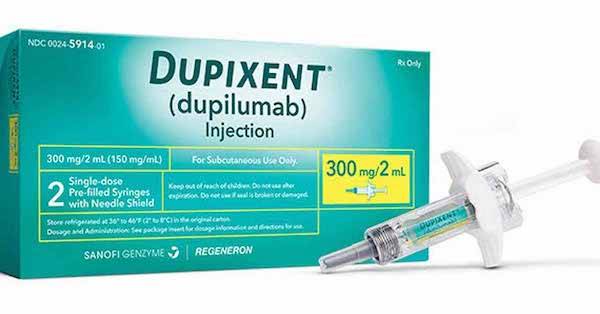
Patients with moderate-to-severe atopic dermatitis (AD) treated with dupilumab experienced durable symptom control and delayed relapse with long-term therapy, according to a real-world retrospective study published in the Journal of the American Academy of Dermatology.
The single-center analysis included 79 patients treated with dupilumab 2022 and 2024. Investigators evaluated treatment response at baseline, week 16, and week 52 using Eczema Area and Severity Index (EASI), SCORAD, pruritus Numeric Rating Scale (NRS), and Dermatology Life Quality Index assessments. Patients continued with either long-term continuous dosing, tapered dosing intervals, or treatment discontinuation following an initial 16-week treatment period with along with follow-up observation.
At week 16, significant clinical improvements were observed across all efficacy endpoints. Mean SCORAD scores improved from 46.62 to 25.22 (P < .001), EASI scores decreased from 15.65 to 5.94 (P < 0.001), and pruritus NRS scores improved from 7.41 to 3.73 (P < 0.001). EASI-50 and EASI-75 response rates reached 72.15% and 44.3%, respectively.
The long-term group maintained a mean relapse-free period of 159.55 days vs. 66.40 days in the short-term group and 48.17 days in the tapering group. Some patients in the long-term cohort were relapse-free for more than 300 days.
The single-center design and limited sample size may affect generalizability and emphasized the need for larger multicenter studies with extended follow-up, according to teh authors. Seven adverse events were reported overall, including ocular-related events and mild injection-site reactions, though no treatment discontinuations occurred because of adverse effects.
“Dupilumab demonstrates excellent efficacy in the treatment of moderate-to-severe AD, effectively delaying disease relapse and exhibiting a favorable safety profile,” the authors wrote. “However, to better understand its long-term efficacy, safety, and to optimize treatment strategies, further studies with larger sample sizes and extended follow-up periods are warranted.”
Source: Qui Y, et al. JAAD. 2026. Doi:10.1016/j.jaad.2025.12.088