
Knee MRI Effusion Changes Track Pain, BMI, Age, and Sex
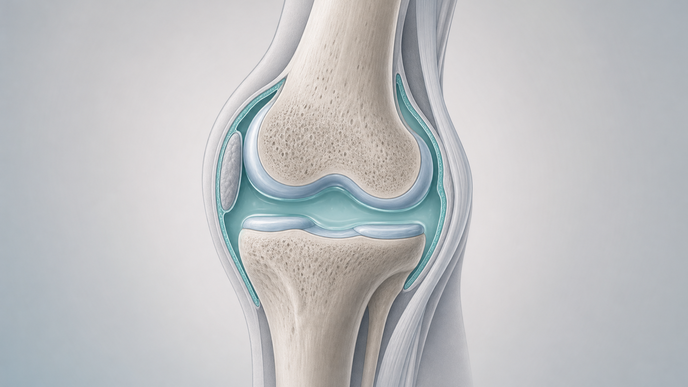
Key Takeaways
- In knees at risk of osteoarthritis in an enriched Osteoarthritis Initiative cohort, female sex, older age, higher body mass index, and greater baseline knee pain were significantly associated with larger subsequent effusion-synovitis volume increases.
- Volume rose by more than 0.5 mL in 45% of knees and fell by that threshold in 37.8%.
- Continuous MRI volume measurements changed even when the categorical MOAKS effusion grade remained unchanged.
- Radiographic grade, diabetes, and functional measures had no significant overall associations with volume change, although walking performance was associated with change in an exploratory subgroup of knees that later developed osteoarthritis.
In a PLOS One knee MRI analysis, investigators studied 680 knees in the Osteoarthritis Initiative’s enriched incident-osteoarthritis sample, including eventual cases and matched nonincident controls. Participants had no symptomatic knee osteoarthritis at entry; eligible knees had baseline Kellgren–Lawrence grade 0–1 and paired baseline and 12-month MRI. Knees developing osteoarthritis during the initial follow-up were excluded. The outcome was follow-up minus baseline MRI-measured effusion-synovitis volume, not incident disease or treatment response. Blinded readers segmented standardized high-field scans using threshold-based OsiriX software and manually excluded cysts and vessels. Separate MRI Osteoarthritis Knee Score (MOAKS) grading categorized effusion. Baseline functional measures included chair stands, timed walks, and body-mass-normalized quadriceps strength. Factor-specific mixed-effects models used participant random intercepts for bilateral knees and adjusted for baseline volume, relevant demographic and clinical factors, and incident-case status.
Effusion-synovitis volume rose in some knees and fell in others. Among knees retaining the same MOAKS effusion grade, mean absolute MRI volume change was 2.10 ± 2.51 mL. Continuous volume and categorical grades have different measurement resolution; this comparison does not establish better clinical outcomes or diagnostic performance.
In adjusted longitudinal analyses, female sex, older age, higher body mass index, and higher baseline Western Ontario and McMaster Universities Osteoarthritis Index (WOMAC) pain scores were significantly associated with greater volume increases. The abstract reports a female-sex coefficient of β=0.18, whereas the main-text longitudinal Results reports β=0.21; coefficients for age, body mass index, and pain also differ between those locations. Kellgren–Lawrence grade, diabetes, quadriceps strength, and walking or other functional performance were not significantly associated with change overall. Walking performance was associated with change in an exploratory subgroup of knees that later developed osteoarthritis.
These observational associations cannot establish causality, and residual confounding remains possible. The enriched sample may not represent all knees at risk; segmentation may vary, and the short follow-up limits longer-term inference. The baseline-volume mean differs between the characteristics description and longitudinal trajectories, without a reconciled estimate. The exploratory subgroup finding does not establish individual-level prediction or a change in practice.
According to the authors, baseline demographic and pain-related measures accompanied short-term changes in MRI-measured effusion-synovitis volume. Radiographic grade, diabetes, and functional measures showed no significant overall associations with that change.
Clinician Questions
Did women with knees at risk of osteoarthritis have higher effusion-synovitis volume at baseline?
No. Female sex was associated with lower baseline MRI-measured volume in the cross-sectional analysis, despite a greater increase over time. Baseline differences and longitudinal change are distinct observational comparisons.
Why can knee effusion-synovitis volume change when the MOAKS effusion grade remains unchanged?
MOAKS assigns whole-knee effusion to categorical grades, while MRI segmentation measures volume continuously. The authors attributed volume changes within unchanged grades to grade thresholds, including possible floor or ceiling effects.
This content is intended for healthcare professionals for educational purposes. The article and its image were developed with AI assistance and reviewed by members of the ReachMD team prior to publication. Please refer to the original source linked for the complete and most up-to-date information.