
Intrathecal Morphine Versus Wound Infiltration After Pancreatoduodenectomy
Key Takeaways
- Single-shot intrathecal morphine was noninferior to continuous wound infiltration for the primary mean pain score outcome after open pancreatoduodenectomy.
- Intrathecal morphine was also noninferior for mean resting pain, with lower early postoperative pain scores and reduced fentanyl consumption for some secondary outcomes.
- Compared with continuous wound infiltration, intrathecal morphine increased respiratory depression and pruritus within the first 24 hours, highlighting the need for careful early monitoring.
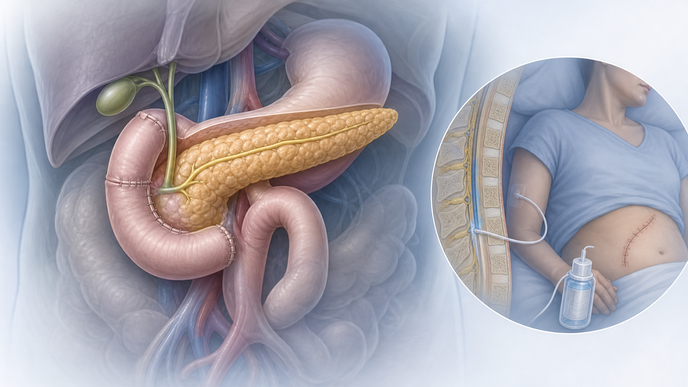
Postoperative pain control after open pancreatoduodenectomy was assessed by comparing single-shot intrathecal morphine with continuous wound infiltration. The main results were reported from a per-protocol analysis within a noninferiority framework.
For the primary mean pain score outcome, the mean difference was -0.5, with a 95% confidence interval from -1.1 to 0.2. Intrathecal morphine was also noninferior for mean resting pain. Compared with continuous wound infiltration, intrathecal morphine provided significantly lower pain scores at 2 hours postoperatively, with sustained reductions in coughing pain at 24 hours and reduced fentanyl consumption.
Compared with continuous wound infiltration, intrathecal morphine increased respiratory depression and pruritus within the first 24 hours. The reported findings support noninferior overall analgesia with superior early pain control, although careful monitoring for early side effects is warranted.