
ICNS Neuron Classes Link to Heart Stress Resilience
Key Takeaways
- A preclinical mouse study from Yale reported that the intrinsic cardiac nervous system contains two major neuron classes, Npy neurons and Ddah1 neurons, with distinct roles.
- Npy neuron stimulation slowed the heart, and loss of that population was associated with rapid deterioration in cardiac function followed by death.
- Ddah1 neuron stimulation or ablation did not appear to alter baseline function or survival under normal conditions.
- During physical-restraint stress, Ddah1 neuron loss was associated with fatal electrical instability and sudden cardiac arrest.
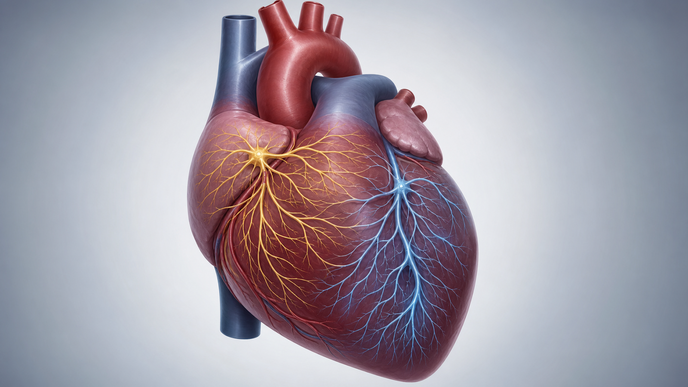
Yale University School of Medicine investigators conducted a preclinical mouse study reported in Cell, The intrinsic cardiac nervous system is essential for cardiac function and survival, after genetically engineering adult mice so intrinsic cardiac nerves would fluoresce. They located those nerves, analyzed active genes, identified Npy and Ddah1 neuronal categories, traced pathways across the heart with 3D imaging, and used targeted stimulation, ablation, and a physical-restraint stress test to probe function.
Three-dimensional mapping indicated that the two neuronal groups projected to different regions of the heart. Npy neuron stimulation slowed the heart, whereas ablation of that population was associated with rapid deterioration in heart function and death. Under normal conditions, stimulation or ablation of Ddah1 neurons did not appear to change baseline function or survival. During physical-restraint stress, however, the investigators reported that Ddah1 neurons mounted a protective response and that their absence was associated with fatal electrical instability and sudden cardiac arrest.
These findings come from genetically engineered adult mice and are best framed as preclinical physiology rather than direct human evidence. The available context does not provide sample size or formal endpoint detail, which limits how precisely the findings can be weighed. The investigators linked dysfunction in this neural network to atrial fibrillation, heart failure, and sudden cardiac death as human-disease context, but those conditions were not tested outcomes in this report.
Overall, the study presents the ICNS as essential to cardiac performance and survival rather than as a purely modulatory input. The main mechanistic takeaway from this Cell study on intrinsic cardiac nervous system neuron classes was an apparent split between Npy-linked baseline control and Ddah1-linked protection during severe stress.
Clinician Questions
What made the intrinsic cardiac nervous system difficult to study before this Cell report?
Its neurons are sparse, which made the network hard to visualize and interrogate in place. The Yale team addressed that barrier by engineering adult mice so the heart’s intrinsic nerves would fluoresce for direct mapping and testing.
How were Npy and Ddah1 intrinsic cardiac neurons distinguished in the mouse experiments?
The investigators first located intrinsic cardiac nerves, then separated them by patterns of active genes into Npy and Ddah1 categories. Three-dimensional imaging then traced each group’s pathways and showed that they projected to different regions of the heart.
What do the mouse findings on Ddah1 neurons appear to apply to under this report?
In this report, the Ddah1 signal was tied to severe physical-restraint stress in genetically engineered adult mice, where these neurons appeared to preserve cardiac electrical stability. The same report did not describe a baseline survival effect for Ddah1 neurons under normal conditions.