
Hippocampal-Avoidance WBRT Planning Improved with 4A-HG
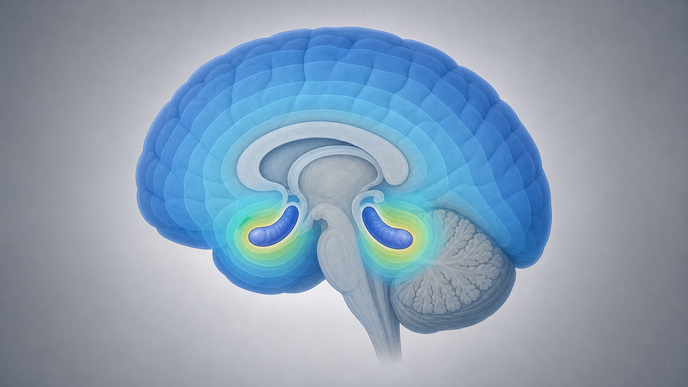
Key Takeaways
- Across HA-WBRT plans generated on Halcyon and Edge, the four-arc hybrid geometry was associated with a better overall balance between whole-brain target coverage and hippocampal sparing than the open-field arc designs.
- More extensive convergence settings were associated with further improvement in plan quality on both platforms.
- The strongest overall conformity and scorecard performance were reached with 4A-HG plus Extended mode.
- Higher-quality plans used more monitor units yet remained deliverable on the reported patient-specific QA testing.
In the Lam et al. cross-platform HA-WBRT knowledge-based planning study, investigators retrospectively studied 20 HA-WBRT patients prescribed 30 Gy in 10 fractions and generated plans on the Varian Halcyon and Edge platforms, which differed in collimation architecture. They tested 2A, 3A, 4A, and 4A-HG beam arrangements; 4A-HG used two full-field arcs plus two collimator-restricted partial-field arcs near the hippocampal region. Each geometry was paired with Off, On, and Extended convergence modes to create 24 plans per patient and 480 plans overall. Plans were normalized so that 95% of the planning target volume (PTV) received the prescription dose and were evaluated with RTOG 0933 metrics plus a custom dosimetric scorecard that included PTV D100% and the Paddick conformity index (PCI), and the highest-monitor-unit plans on each platform also underwent patient-specific quality assurance testing.
With Edge under On mode, PTV D100% improved from 19.433 Gy with 2A to 20.011 Gy with 4A-HG (p=0.009), supporting better target coverage with the hybrid geometry. Conformity was highest with 4A-HG Extended, reaching a PCI of 0.940 on Halcyon and 0.944 on Edge, and the highest mean scorecard result was 157/184 on Edge. On Halcyon under Extended mode, hippocampus Dmax fell from 14.446 Gy with 2A to 13.662 Gy with 4A-HG (p<0.001). Similar same-direction hippocampal sparing was seen on Edge, and more extensive convergence improved PTV and hippocampus metrics within 4A-HG on both platforms. All 480 plans met the reported RTOG 0933 per-protocol goals for PTV D98%, PTV D2%, optic nerves and chiasm Dmax, and acceptable-variation hippocampus D100%, while 6 of 480 plans exceeded the unacceptable hippocampus Dmax threshold above 17 Gy and all of those were Halcyon plans using Off mode.
The better-performing 4A-HG geometry and more extensive convergence settings used more monitor units and required longer optimization. In the tested CPU-based workflow, planning took approximately 243 minutes for Extended, 60 minutes for On, and 26 minutes for Off, and CPU-only optimization, hardware limits, and high-resolution structures likely influenced those absolute times. The plans were generated outside routine clinical workflow to standardize the comparison, and the in-house RapidPlan model was used to reduce inter-planner variability rather than represent the best achievable plan quality. Routine spatial dose-distribution review was not part of the formal evaluation, and any Halcyon-Edge differences remained secondary because direct platform comparison was not the primary focus.
Within this KBP HA-WBRT workflow, 4A-HG was the strongest tested beam-geometry strategy and more extensive convergence settings further improved plan quality across both platforms. Those gains were paired with higher monitor-unit use and longer optimization time, while the reported findings remained confined to dosimetric plan quality rather than clinical outcomes.
Clinician Questions
How was the four-arc hybrid geometry adapted across the two planning platforms?
For HA-WBRT, 4A-HG combined two full-field VMAT arcs for broad whole-brain coverage with two collimator-restricted partial-field arcs near the hippocampal region, and the field restriction was implemented with the limit MLC feature on Halcyon and with jaws on Edge. That shared layout was designed to tighten modulation around the hippocampi while keeping the remainder of the target more openly exposed.
What dosimetric endpoints defined plan quality in this HA-WBRT planning comparison?
Plan quality in this HA-WBRT comparison was assessed with RTOG 0933 dosimetric criteria and a custom scorecard that incorporated planning target volume minimum-dose measures, including PTV D100%, together with Paddick conformity index and hippocampal and other organ-at-risk measures. Including PTV D100% allowed the evaluation to reflect how well coverage was maintained in the portions of the whole-brain target closest to the hippocampal avoidance region.
What limits the generalizability of these KBP HA-WBRT planning results to routine workflow?
These findings came from a retrospective dosimetric planning comparison rather than a clinical outcomes trial, and the plans were created outside routine workflow to standardize the test conditions. The in-house RapidPlan model was intended to reduce inter-planner variability instead of defining the best achievable plan, routine spatial dose-distribution review was not formally evaluated, and planning times were shaped by a CPU-based optimization workflow and local hardware constraints.