
Gestational Diabetes in England Rose 60% in Five Years
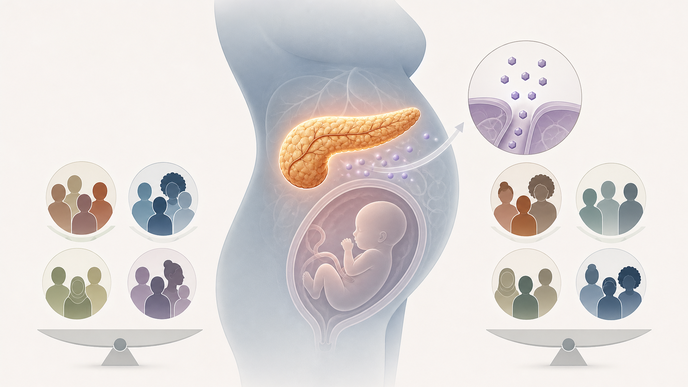
Key Takeaways
- In England, gestational diabetes diagnoses rose from around 8% of pregnancies in 2018 to more than 12% in 2022, a 60% increase over five years.
- Rates were highest among Asian women at around 23% and among women living in the most deprived areas at around 14%.
- Pregnancy outcome inequalities included more emergency Cesarean births among Black mothers, more preterm births among women in deprived areas, and more small-for-gestational-age births among Asian mothers.
- Among these higher-risk groups, gestational diabetes was associated with a further increase in preterm birth risk.
- COVID-19-era screening changes did not meaningfully alter the diagnosis trend, and investigators cited maternal age, obesity, and improved data capture as possible contributors.
Researchers conducted a contemporary cross sectional observational study using routinely collected National Health Service (NHS) maternity data from England between 2018 and 2022 in the BMJ Medicine study on gestational diabetes incidence and inequalities in England.
The dataset covered over 2.3 million mothers, around 2.8 million births, and 184 hospitals.
Investigators examined GDM incidence, inequalities in adverse pregnancy outcomes, and whether screening changes introduced during the COVID-19 pandemic aligned with diagnosis patterns across England.
Diagnoses rose steadily across the study period, with the heaviest burden reported among Asian women and among women living in the most deprived areas.
The study also described unequal pregnancy outcomes across ethnic and socioeconomic groups, with more emergency Cesarean births among Black mothers, more preterm births among women in deprived areas, and more small-for-gestational-age births among Asian mothers. Within these higher-risk groups, GDM was associated with a further increase in preterm birth risk, while pandemic-era screening changes did not meaningfully alter overall diagnosis trends.
Because this was a cross sectional observational analysis of routinely collected maternity data, the reported associations are not causal. The source describes emergency Cesarean birth, preterm birth, and small-for-gestational-age inequalities across ethnic and socioeconomic groups, and specifically reports that gestational diabetes was associated with additional preterm birth risk within these higher-risk groups. The available reporting did not include adjusted effect sizes, confidence intervals, or detailed subgroup modeling, which limits how precisely the relative contributions of ethnicity, deprivation, and GDM itself can be separated. Investigators cited rising maternal age, increasing obesity, and improved data capture as likely contributors to the increase in diagnoses.
Overall, the findings depict GDM in England as a growing population-level burden that tracks with ethnic and socioeconomic inequalities rather than with a temporary testing artifact. Published in BMJ Medicine as incidence of gestational diabetes and inequalities in adverse pregnancy outcomes in England, the study describes national patterns in England; comparable U.S. or North American rates were not reported.
Clinician Questions
How far do these gestational diabetes data from England extend beyond the UK?
These findings are most directly applicable to England because they come from nationwide NHS maternity records rather than a single-center cohort. They describe population patterns within England, and no U.S. or North American rates were reported for comparison.
Does this England analysis show that gestational diabetes caused the reported pregnancy outcome gaps?
No. This was a contemporary cross sectional observational study using routinely collected maternity data, so the reported associations are not proof of causation. The source describes emergency Cesarean birth, preterm birth, and small-for-gestational-age birth inequalities across ethnic and socioeconomic groups, and specifically reports that gestational diabetes was associated with additional preterm birth risk within these higher-risk groups. The available reporting also did not provide adjusted effect sizes or detailed subgroup modeling.
What longer-term health risks after pregnancy were mentioned alongside gestational diabetes?
Gestational diabetes was described as being linked to long-term health risks for mothers and children, and the accompanying expert commentary specifically mentioned future type 2 diabetes and cardiovascular disease after pregnancy.