
FDA Grants De Novo for Smith+Nephew’s TESSA ACL System
Key Takeaways
- Smith+Nephew said the TESSA Spatial Surgery System received FDA action for an initial knee indication in femoral ACLR.
- The company described TESSA as the first device in a new FDA category for intra-articular orthopedic stereotaxic navigation instruments.
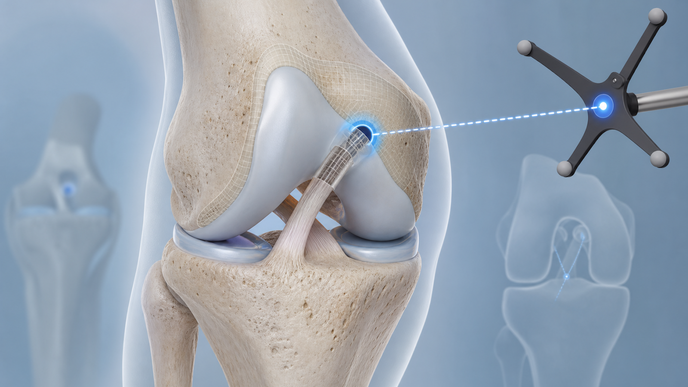
- The platform is described as combining preoperative MR or CT imaging, cloud-based deep-learning processing, patient-specific 3D modeling, and live 4K arthroscopic overlay for real-time navigation.
- In the ACLR background cited in the announcement, femoral malposition accounted for 29% and tibial malposition for 11% of common reasons for failure.
- Smith+Nephew said commercial introduction is planned for Q3 2026, with increased deployment anticipated in 2027.
The TESSA Spatial Surgery System, or Tracking Enabled Spatial Surgery Assistant, is an augmented reality platform whose first named indication is femoral anterior cruciate ligament reconstruction surgery of the knee. The workflow begins with preoperative magnetic resonance (MR) or computed tomography (CT) imaging, followed by cloud-based deep-learning neural net processing on Amazon Web Services (AWS) to generate patient-specific 3D anatomical models. The system is then described as overlaying a patient-specific 3D bone model onto live 4K arthroscopic video to provide real-time video-based navigation and assist femoral tunnel placement during surgery.
Smith+Nephew said the US Food and Drug Administration granted De Novo classification to the TESSA Spatial Surgery System and described it as the first device in a new FDA category for intra-articular orthopedic stereotaxic navigation instruments. In the same announcement, the company said commercial introduction is planned during Q3 2026, with increased deployment anticipated in 2027.
Clinician Questions
What FDA action was reported for the TESSA Spatial Surgery System?
Smith+Nephew said the US Food and Drug Administration granted De Novo classification to the TESSA Spatial Surgery System, and the company described it as the first device in a new FDA category for intra-articular orthopedic stereotaxic navigation instruments.
What is the first indicated use for the TESSA Spatial Surgery System in knee surgery?
The first indication named in the announcement is femoral anterior cruciate ligament reconstruction surgery of the knee, with the system described as assisting femoral tunnel placement and navigation.
How does the TESSA Spatial Surgery System generate intraoperative navigation?
The system is described as using preoperative MR or CT scans, cloud-based deep-learning neural net algorithms on AWS, patient-specific 3D anatomical model generation, and overlay of a patient-specific 3D bone model onto live 4K arthroscopic video for real-time video-based navigation.
What commercialization timeline was reported for the TESSA Spatial Surgery System?
The company said commercial introduction is planned during Q3 2026, with increased deployment anticipated in 2027, and that timing was presented as a company-reported rollout plan.