
Exercise Rehabilitation After ACL Rupture: Trial Readout on BMD and Function
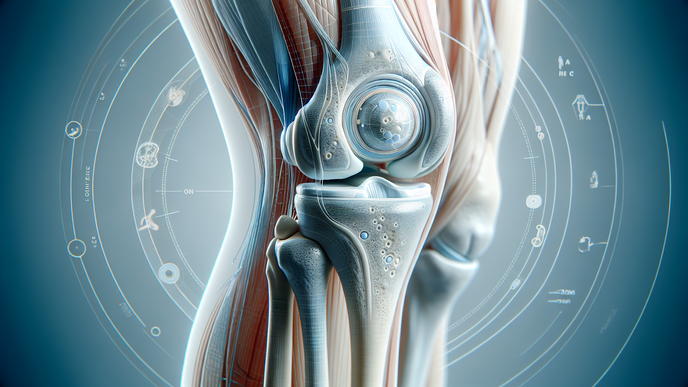
An recent study reported on whether adding a 6-week exercise rehabilitation program to conventional treatment influenced early recovery after ACL rupture in 58 patients with ACL rupture randomized to two groups. Participants received conventional treatment alone or conventional care plus exercise rehabilitation, with outcomes compared from baseline to the 6-week follow-up. Reported results focused on short-term changes in knee bone mineral density, muscle strength, and physical function between the two groups.
Knee bone mineral density was measured with DEXA, and muscle performance was assessed using isokinetic strength testing. Physical function was tracked using IKDC, Lysholm, and VAS at baseline and again at 6 weeks. The study also lists t tests, analysis of variance, and Mann-Whitney testing for between-group comparisons across bone, strength, and patient-reported domains over the same interval.
The study reported a between-group difference in knee bone mineral density at the lateral femoral condyle. At 6 weeks, BMD at that site was 1.47±0.24 g/cm² with conventional treatment versus 1.65±0.37 g/cm² with exercise rehabilitation (p=0.041). For strength outcomes, concentric quadriceps and hamstrings peak torque measures were higher in the exercise group than in the control group, with reported p values below 0.001 and 0.017. Differences were also reported for eccentric quadriceps performance and the hamstrings-to-quadriceps ratio (p=0.033 and 0.043).
Patient-reported physical function also improved with exercise rehabilitation versus control across IKDC, Lysholm, and VAS measures. IKDC and Lysholm changes favored exercise rehabilitation with reported p values below 0.001, and VAS improved with a reported p value of 0.002 at 6 weeks. The authors concluded that 6 weeks of exercise rehabilitation may delay bone mineral density decline at the lateral femoral condyle after ACL rupture, and they interpreted the program as enhancing recovery of muscle strength and physical function over the same 6-week period.
Key Takeaways
- Fifty-eight patients with ACL rupture were randomized to conventional care with or without an added 6-week exercise rehabilitation program, with assessment at baseline and 6 weeks.
- At 6 weeks, the study reported a favorable pattern across lateral femoral condyle bone mineral density, muscle strength measures, and IKDC, Lysholm, and VAS outcomes in the exercise rehabilitation group versus control.
- In this 6-week comparison, the authors concluded that exercise rehabilitation added to conventional treatment may delay BMD decline at the lateral femoral condyle and may improve measures of muscle strength and physical function.