
Estrogen Prescriptions Linked to Porphyria Cutanea Tarda
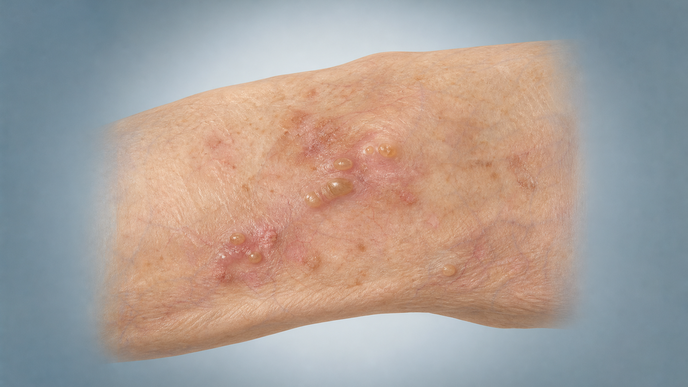
Key Takeaways
- In Denmark, women with a first hospital PCT diagnosis more often had recently redeemed estrogen prescriptions than matched population controls.
- Estrogen-containing contraceptives, estrogen-only therapy, and combined estrogen–progestogen therapy each showed an association with incident PCT.
- Oral estrogen-containing therapy was associated with incident PCT, but an association was not reported for nonoral routes.
Investigators used nationwide Danish registries in the Danish estrogen–porphyria cutanea tarda analysis, covering January 1, 1995, through November 1, 2024. They identified 438 women with a first hospital PCT diagnosis and 43,800 population controls matched 1:100 on age, sex, and index date. The outcome was the first hospital diagnosis; exposure meant at least one redeemed estrogen-containing prescription during the preceding year. Conditional logistic regression generated adjusted odds ratios (ORs) with 95% confidence intervals (CIs), with analyses by therapy type and administration route. Adjustment covered specified PCT-related conditions and smoking- and substance-use-related diagnosis-or-treatment proxies.
During the preceding year, 154 cases (35%) and 9433 controls (22%) had redeemed an estrogen-containing prescription. The adjusted association between recorded estrogen exposure and a first hospital PCT diagnosis was an OR of 2.03 (95% CI 1.66–2.49).
Associations with incident PCT were reported separately for estrogen-containing contraceptives, estrogen-only therapy, and combined estrogen–progestogen therapy. For oral estrogen-containing therapy, the adjusted OR was 2.44 (95% CI 1.66–3.59). Nonoral routes were not associated with PCT in the reported analyses. The therapy-type findings do not establish differences between formulations.
Matched case–control associations cannot establish that estrogen caused PCT or measure absolute PCT incidence. Prescription redemption documents dispensing, not confirmed use, so the recorded exposure does not establish how much medication was taken.
The investigators interpreted estrogen exposure as associated with incident PCT and regarded administration route as relevant when evaluating estrogen as a potential PCT risk factor.
Clinician Questions
What evidence linked estrogen therapy to porphyria cutanea tarda before the Danish registry analysis?
Estrogen-containing therapy had been considered a possible porphyria cutanea tarda risk factor primarily on evidence from clinical series and case reports, which did not establish causation.
Which PCT-related factors were included when estimating the estrogen–porphyria cutanea tarda association?
In the Danish matched case–control analysis of women with a first hospital PCT diagnosis, conditional logistic regression accounted for human immunodeficiency virus (HIV) infection; liver disease, viral hepatitis, or iron overload; a smoking-related diagnosis or treatment; and an alcohol- or drug-misuse-related diagnosis or treatment. Smoking and substance-use entries were diagnosis-or-treatment proxies, not confirmed direct measurements, and adjustment does not exclude every possible confounder.
This content is intended for healthcare professionals for educational purposes. The article and its image were developed with AI assistance and reviewed by members of the ReachMD team prior to publication. Please refer to the original source linked for the complete and most up-to-date information.