
Endoscopic Midface Rejuvenation Study Reports Improvements at 15 Months
Key Takeaways
- A 62-patient study evaluated an endoscopic technique combining periorbital and midface mobilization with direct periosteal fixation rather than relying on suspension alone.
- At a mean follow-up of 15.2 months, brow height increased 18.3%, lateral canthal angle increased 8.4%, and lower eyelid length decreased 19.7% (P < 0.05).
- No major complications or zygomatic branch injuries were reported; 3 patients (4.8%) experienced transient frontal branch neuropraxia lasting longer than 1 month.
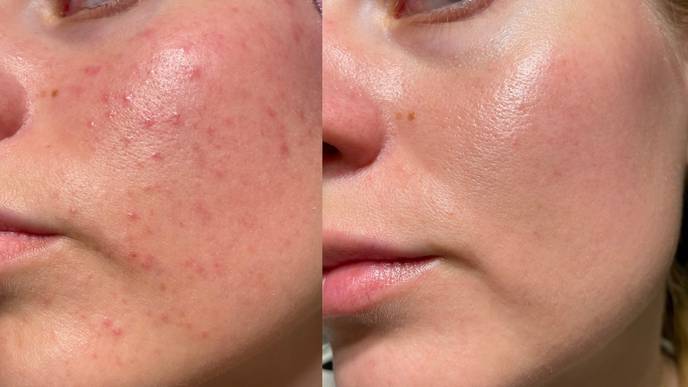
A direct-fixation approach to endoscopic facial rejuvenation produced measurable changes in brow position, lateral canthal angle, and lower eyelid length in a case series of 62 patients, according to findings published in Aesthetic Plastic Surgery.
Two researchers evaluated endoscopic periorbital and midface rejuvenation with direct fixation as an alternative to suspension-based techniques for patients with early aging changes affecting the brow, periorbital region, and midface.
Direct Fixation Targets the Periorbital-Midface Unit
The procedure uses a transtemporal incision with endoscopic dissection and sequential release of temporal ligamentous structures. Surgeons enter the prezygomatic space and vertically mobilize the tissues before directly fixing the malar fat pad to the periosteum of the lateral orbital rim. Temporal lifting is performed with barbed sutures.
Investigators assessed outcomes using standardized photographic measurements and patient-reported FACE-Q domains. The 62 patients had a mean follow-up of 15.2 months. Brow height increased by a mean 18.3%, while lateral canthal angle increased 8.4%. Lower eyelid length decreased by a mean 19.7%. All changes were statistically significant (P < 0.05). FACE-Q scores also improved significantly across all domains evaluated, although the abstract did not provide domain-specific scores or effect sizes.
No major complications or temporary or permanent zygomatic branch injuries occurred. Three patients (4.8%) developed transient frontal branch neuropraxia lasting longer than 1 month.
The authors classified the study as Level IV evidence. Limitations identifiable from the abstract include the absence of a comparator group and the relatively modest sample size.
“Endoscopic periorbital and midface rejuvenation with direct fixation provides effective improvement of the brow–periorbital–midface complex with a favorable safety profile,” the authors concluded.
Source
Ersan M, Yildiz HA. Aesth Plast Surg. 2026. Doi:10.1007/s00266-026-06244-w