
ED Overcrowding Linked to Leaving Before Treatment
Key Takeaways
- At a quaternary emergency department in Victoria, Australia, 2.9% of presentations ended before treatment.
- Did-not-wait (DNW) presentations involved younger patients and more lower-acuity triage assignments, although 36.4% of DNW presentations were Australian Triage Scale (ATS) category 3.
- Severe and dangerous overcrowding were each associated with significantly higher adjusted DNW odds than busy conditions.
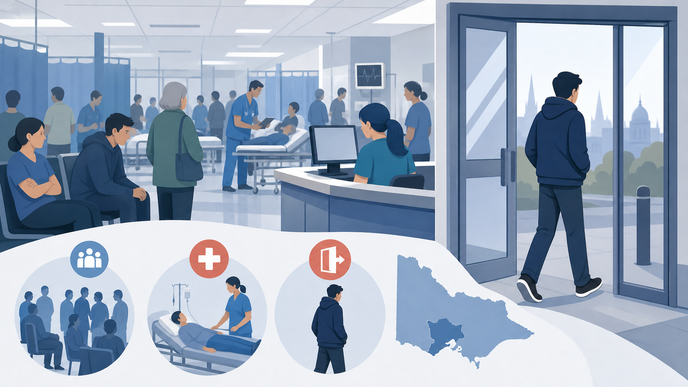
Investigators conducted a quantitative comparative observational study, guided by the Strengthening the Reporting of Observational Studies in Epidemiology (STROBE) checklist, at one quaternary ED in Victoria, Australia. The unit of analysis was 37,137 presentations. In their observational comparison of emergency department departures before treatment, investigators contrasted presentations classified as did not wait (DNW) before receiving treatment with treated presentations. They examined patient age, Australian Triage Scale (ATS) category, and department crowding. Busy conditions served as the reference for adjusted comparisons involving severe and dangerous overcrowding.
Of these presentations, 1,064 ended before treatment; most others received treatment. Median age was 37 years among DNW presentations versus 46 years among treated presentations, a statistically significant difference. Lower-acuity ATS categories were also significantly more frequent among DNW presentations. These comparisons concern presentations, not necessarily distinct individuals.
During severe overcrowding, the adjusted odds ratio (aOR) for DNW was 2.53 compared with busy conditions (95% confidence interval [CI] 1.99–3.24; p<0.001). This association remained statistically significant after adjustment. Busy conditions, rather than another overcrowding level, were the reference for this estimate.
During dangerous overcrowding, the aOR for DNW was 14.99 compared with busy conditions (95% CI 10.15–22.05; p<0.001). This separate association also used busy conditions as its reference, rather than directly comparing dangerous with severe overcrowding.
These single-center observational associations do not establish that crowding caused departures, and changing crowding was not tested as a way to prevent them. Leaving before care raises a potential safety concern, but the available findings do not report outcomes after departure, such as harm, return visits, or death. Investigators interpreted extreme crowding as a major factor associated with DNW and suggested that departure before treatment may indicate ED system performance.
Clinician Questions
Do adjusted odds of leaving a Victorian emergency department before treatment indicate absolute departure risk?
No. For ED presentations in Victoria, Australia, adjusted odds of departure before treatment during severe or dangerous overcrowding were compared with odds during busy conditions. Odds ratios are neither relative risks nor absolute risk increases; crowding-category-specific absolute departure rates were not reported.
How were severe and dangerous overcrowding defined for did-not-wait presentations in the Victorian emergency department?
For the comparison of did-not-wait and treated presentations at a quaternary ED in Victoria, Australia, busy conditions were the reference for adjusted crowding comparisons, but severity thresholds and the variables included in adjustment are not specified in the available findings.
This content is intended for healthcare professionals for educational purposes. The article and its image were developed with AI assistance and reviewed by members of the ReachMD team prior to publication. Please refer to the original source linked for the complete and most up-to-date information.