
Early Diabetic Retinopathy Regression in Teleophthalmology
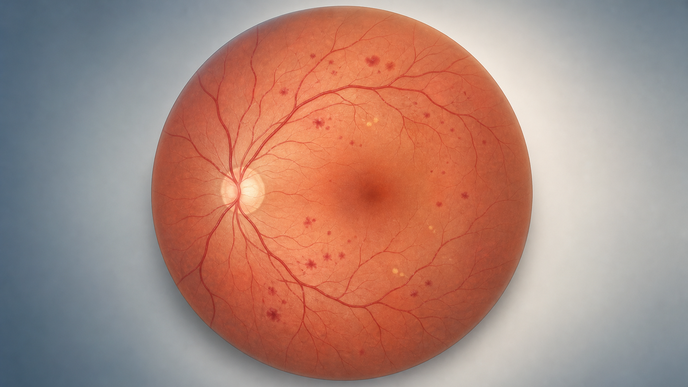
Key Takeaways
- Among adults with type 2 diabetes in the U.S. Indian Health Service teleophthalmology program with gradable follow-up images, the abstract and results report that 47% with very mild baseline NPDR regressed to no detectable DR and 27% had any progression; the discussion instead cites 19% progression.
- With mild baseline NPDR and gradable follow-up images, 36% regressed to very mild NPDR or no DR versus 34% with any progression.
- Higher HbA1c was associated with lower adjusted odds of regression in both baseline severity groups.
- Insulin use versus oral agents was associated with lower adjusted odds of regression in both groups, without establishing a treatment effect.
- Longer diabetes duration was associated with lower adjusted odds of regression only in the very mild NPDR group.
Investigators conducting Bursell and colleagues’ PLOS ONE cohort analysis retrospectively examined de-identified records from the U.S. Indian Health Service primary care-based teleophthalmology program. The full-text Methods describe baseline imaging in 2015 and eligible final follow-up imaging during 2016–2019, 6–36 months after baseline; the abstract instead gives a 2015–2017 baseline period. Adults aged at least 20 years had type 2 diabetes and very mild or mild NPDR at baseline. Those with more advanced baseline retinopathy, proliferative DR, or diabetic macular edema were excluded. Eligible follow-up examinations were available for 2,348 patients with very mild NPDR and 705 with mild NPDR; final images that could not be graded were excluded from outcome calculations.
Certified licensed optometrists graded standardized retinal images using Early Treatment Diabetic Retinopathy Study (ETDRS) categories with ophthalmologist oversight. Each patient’s severity reflected the worse eye. More than 80% of examinations used nonmydriatic ultra-widefield imaging; the remainder used nonmydriatic fundus photography. The mean baseline-to-final-follow-up interval was 22.8 ± 7.9 months. Regression meant no detectable DR after very mild NPDR, but either very mild NPDR or no DR after mild NPDR; unchanged and worsened grades were separate outcomes. Severity-specific multivariable models compared regression with all other outcomes, adjusting for age, sex, diabetes therapy, diabetes duration, and hemoglobin A1c (HbA1c).
From very mild baseline NPDR, graded improvement reached no detectable DR, while worsening included transitions to mild and more advanced grades. From mild baseline NPDR, improvement included transitions to very mild NPDR or no DR; other examinations showed stability or progression. For very mild baseline NPDR, each percentage-point higher HbA1c was associated with lower adjusted odds of regression versus all other outcomes (odds ratio, 0.86; 95% confidence interval, 0.82–0.90). Insulin use versus oral agents was also associated with lower adjusted odds (odds ratio, 0.61; 95% confidence interval, 0.50–0.75). Both associations occurred in the mild group, whereas longer diabetes duration was associated with lower odds only in the very mild group.
Nearly half of initially eligible patients lacked an examination in the follow-up window, and some final images were ungradable and excluded from outcome calculations. Turnover of early retinal lesions or grading variation may contribute to apparent regression. Records did not completely capture body mass index, other laboratory measures, or medication information, limiting assessment of other systemic factors. These observational associations cannot establish whether insulin use or a change in HbA1c caused a lower grade. They also do not establish different screening or referral intervals.
Bursell and colleagues concluded that downward graded change occurred more often than progression in the followed cohort, particularly from very mild NPDR. Glycemic status and diabetes treatment category were associated with regression, without an established causal explanation for the treatment-category association. The observed endpoint was a change in retinal image grade across examinations, not a demonstrated treatment effect.
Clinician Questions
Were apparent improvements in very mild NPDR checked against consecutive teleophthalmology examinations?
In the Indian Health Service cohort of adults with type 2 diabetes and baseline very mild or mild NPDR, investigators repeated the analysis among patients assigned the same severity diagnosis on two consecutive follow-up examinations. Outcome patterns and associations with measured diabetes characteristics were similar; this check does not eliminate concern about variable grading.
How were missing HbA1c measurements handled in the adjusted analysis of early NPDR regression?
For adults with type 2 diabetes and early NPDR in this Indian Health Service cohort, investigators substituted a follow-up HbA1c value when the baseline value was unavailable and used the cohort mean if neither measurement was available.