
Drain Omission, Somatostatin Analogues Cut Pancreatic Fistula
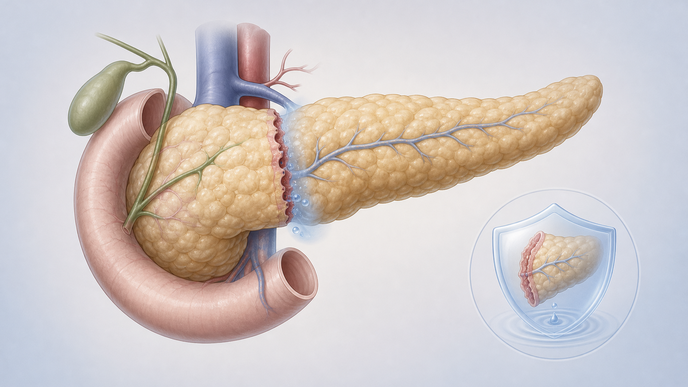
Key Takeaways
- Among patients after partial pancreatectomy, pooled clinically relevant grade B/C fistula incidence was 15.1% overall, 14.2% after pancreatoduodenectomy, and 19.1% after left pancreatectomy.
- Omitting drains after left pancreatectomy was associated with significantly less grade B/C fistula, with high GRADE certainty.
- Perioperative somatostatin analogues were associated with significantly less grade B/C fistula across pooled surgical settings, with moderate certainty.
- Perioperative corticosteroids were associated with significantly less grade B/C fistula, but certainty was low and some leave-one-out analyses lost significance.
Montorsi and colleagues assembled English-language, full-text randomized clinical trials published from January 1, 2005, through July 31, 2025, using the International Study Group for Pancreatic Surgery (ISGPS) Evidence Map of Pancreatic Surgery for their BJS Open meta-analysis of pancreatic fistula prevention. The evidence map contained 193 trials enrolling 29,408 patients across 24 countries. The primary outcome was clinically relevant grade B/C postoperative pancreatic fistula under the 2005 or 2016 ISGPS definitions, excluding grade A/biochemical leaks.
Of those trials, 46 contributed to eight intervention meta-analyses. Pooling required at least one positive trial and at least three trials of an intervention, whether or not the remaining trials were positive. Investigators used random-effects pooling, assessed risk of bias in selected trials, and rated certainty with Grading of Recommendations, Assessment, Development and Evaluation (GRADE). Comparisons paired no drain with a drain after left pancreatectomy and each perioperative drug approach with standard care across trials spanning both operations.
After left pancreatectomy, no drain versus a drain was associated with less grade B/C fistula (odds ratio (OR) 0.52, 95% confidence interval (CI) 0.35–0.78), with high GRADE certainty. Perioperative somatostatin analogues versus standard care were also associated with lower fistula odds across pooled surgical settings (OR 0.48), with moderate certainty. These comparisons concern distinct interventions and do not establish a benefit for drain omission after pancreatoduodenectomy or for every analogue.
Perioperative corticosteroids versus standard care were associated with lower odds of grade B/C fistula (OR 0.48, 95% CI 0.24–0.96), but GRADE certainty was low. The association lost statistical significance when some individual trials were omitted; drain-omission and somatostatin-analogue findings persisted in leave-one-out analyses. Primary comparisons were not statistically significant for duct stenting versus no stent, duct-to-mucosa versus invagination pancreatojejunostomy, pancreatogastrostomy versus pancreatojejunostomy, or early versus later drain removal after pancreatoduodenectomy, nor for stump patches or sealants versus no patch after left pancreatectomy. Excluding high-risk-of-bias trials made the stenting and left-pancreatectomy stump sealant comparisons significant in sensitivity analyses, without changing their primary results.
The authors noted that requiring a positive trial for eligibility could leave out other useful interventions. Surgical practices, fistula definitions, patient mix, and drug agents and timing varied across the evidence period. The nonsignificant primary comparisons therefore remain inconclusive rather than establishing that the approaches are ineffective. Few trials focused primarily on high-risk patients, and none tested combinations of preventive measures.
Montorsi and colleagues concluded that pooled reductions favored drain omission after left pancreatectomy, perioperative somatostatin analogues, and perioperative corticosteroids, with high, moderate, and low certainty, respectively. Further randomized trials, particularly in high-risk groups or evaluating combinations, may change those conclusions.
Clinician Questions
Why can grade B/C pancreatic fistula be harder to diagnose after drainless left pancreatectomy?
After left pancreatectomy without an abdominal drain, the conventional drain-based diagnosis of postoperative pancreatic fistula cannot be made, Montorsi and colleagues note. This measurement complication qualifies the observed reduction in grade B/C fistula without establishing that the reduction is merely a diagnostic artifact.
Did octreotide alone reproduce the pooled somatostatin-analogue finding for pancreatic fistula prevention?
For grade B/C postoperative pancreatic fistula after partial pancreatectomy, octreotide-only trials did not show a statistically significant reduction, although analyses restricted to pancreatoduodenectomy retained significance for somatostatin analogues. Montorsi and colleagues attributed much of the broader drug-class finding to pasireotide and cautioned against generalizing it uniformly across analogues.
Was perioperative corticosteroid benefit consistent across pancreatic operations and individual drugs?
For grade B/C postoperative pancreatic fistula after partial pancreatectomy, the pooled corticosteroid association was not statistically significant when trials were restricted to pancreatoduodenectomy, whereas the hydrocortisone-only subgroup retained a significant association. The authors cautioned against treating different corticosteroids or operations as interchangeable.