
Diranersen Slows Decline in Phase 2 CELIA Trial for Early Alzheimer Disease
Key Takeaways
- After 18 months, diranersen was associated with less decline than placebo across the named clinical measures in early Alzheimer disease.
- The clinical signal was paired with a biomarker effect, and investigators described the result as randomized, placebo-controlled support for tau lowering.
- Biogen has advanced diranersen into phase 3 development, and the therapy is not yet available to patients.
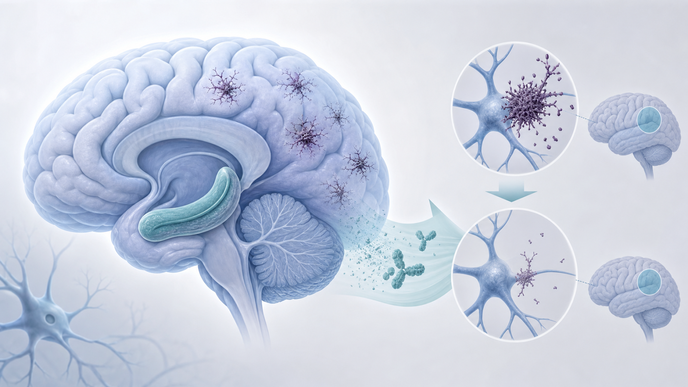
CELIA was a phase 2 trial in people with early Alzheimer disease, and the London presentation focused on a tau-directed strategy rather than an amyloid-focused one. The therapy was designed to reduce tau production, which investigators linked to a disease process that tracks more closely with neurodegeneration and cognitive symptoms than amyloid. Roberson contrasted that rationale with marketed amyloid-removing drugs that offer modest benefit, keeping tau in view as a complementary target. Investigators described the findings as the strongest evidence to date that targeting tau can alter Alzheimer disease course and as the first randomized, placebo-controlled evidence that lowering tau may provide clinical benefit.
After 18 months, participants receiving the lowest tested dose showed 42% less decline on the Alzheimer’s Disease Assessment Scale-Cognitive Subscale versus placebo. The same group had 50% less decline on the Mini-Mental State Examination compared with placebo. All three named measures were reported in the lowest tested dose group, concentrating the clinical signal in that cohort. Investigators also paired the clinical findings with a biomarker effect. The trial was described as technically missing its target of showing higher doses worked better than lower doses, leaving a mixed readout.
Safety discussion remained general, reflecting concern that partial tau reduction could disrupt a protein with normal physiologic roles in neurons. Earlier mouse-model work in which substantial tau reduction was well tolerated was cited as broad reassurance. The available text did not describe new CELIA adverse-event rates. Biogen has advanced diranersen into phase 3, but the therapy is not yet available to patients, and larger trials remain necessary before any potential FDA approval. Roberson added that future Alzheimer treatment may involve combinations that target both amyloid and tau.