
Diffusive Versus Convective CRRT in AKI
Key Takeaways
- No advantage was observed for diffusive versus convective therapy for ICU mortality, 28-day mortality, renal recovery, or ICU length of stay.
- Filter clotting was less frequent with diffusive therapy, and the authors linked this to longer filter lifespan in their conclusion.
- The pooled evidence included 13 studies and 1,146 patients, combining randomized and observational comparisons.
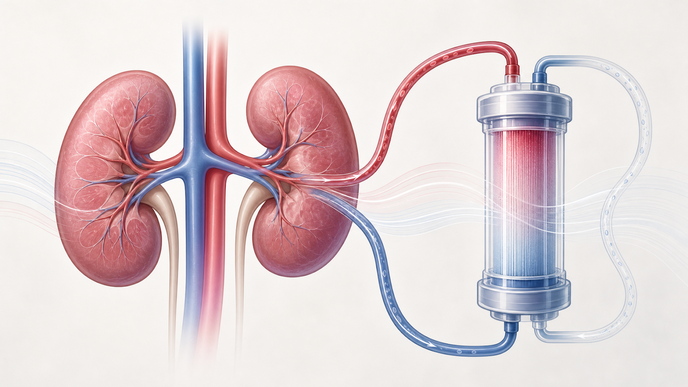
The review examined whether the mode of solute clearance influenced mortality and renal recovery in patients with acute kidney injury who required continuous renal replacement therapy. The protocol was registered in PROSPERO as CRD420251030433. Searches covered PubMed, the Cochrane Library, and LILACS through April 24, 2025, and included randomized controlled trials and observational studies. Risk of bias was assessed with Cochrane ROB 2 and ROBINS-I tools, framing the pooled comparison of diffusive and convective CRRT strategies in acute kidney injury.
For ICU mortality, the pooled risk ratio was 1.04, with a 95% confidence interval from 0.83 to 1.30 and a p value of 0.73. For 28-day mortality, the pooled risk ratio was 1.19, with a 95% confidence interval from 0.89 to 1.59 and a p value of 0.25. Renal recovery showed a pooled risk ratio of 1.07, with a 95% confidence interval from 0.65 to 1.75 and a p value of 0.79. ICU length of stay was also similar, with a standardized mean difference of 0.16, a 95% confidence interval from -0.17 to 0.49, and a p value of 0.33. These pooled estimates showed no apparent advantage for the diffusive modality on those endpoints.
Filter clotting was the outcome that differed between the two approaches. The pooled risk ratio for clotting was 0.69, with a 95% confidence interval from 0.58 to 0.81 and a p value below 0.001. That estimate corresponded to 31% less frequent clotting with diffusive therapy. In the authors' conclusion, mortality and renal recovery did not differ between modalities, while diffusive therapy was associated with longer filter lifespan because clotting was less frequent.