
From SCALE 2026: Dermatologists Navigate the Expanding Role of GLP-1s in Skin Health and Aesthetic Care
Key Takeaways
- GLP-1 receptor agonists are increasingly relevant in dermatology, with implications that extend beyond weight loss to include inflammatory skin disease management, aesthetic changes, and procedural considerations.
- Rapid adipose loss associated with GLP-1 therapy can contribute to facial deflation, telogen effluvium, micronutrient deficiencies, and delayed wound healing, making nutritional counseling and laboratory monitoring essential.
- Emerging evidence suggests GLP-1 therapies may improve conditions such as psoriasis and hidradenitis suppurativa through reductions in systemic inflammation and improved metabolic function.
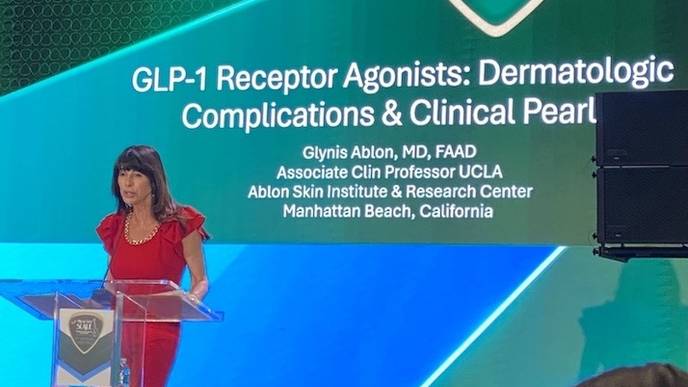
As use of GLP-1 receptor agonists continues to surge, dermatologists are increasingly encountering the downstream effects of these medications in both medical and cosmetic practice. During a session at the 2026 Music City SCALE meeting in Nashville, dermatologist and researcher Glynis Ablon, MD, an associate clinical professor at UCLA and head of the Ablon Skin Institute and Research Center, discussed the growing need for dermatologists to understand the cutaneous, procedural, and immunologic implications of these therapies as patient demand continues to expand.
“We are in the era where one in eight are on GLP-1s,” Ablon said. “One in five have tried it. These drugs are here to stay.”
Originally developed for diabetes management and obesity treatment, GLP-1 receptor agonists now occupy a central role in discussions surrounding metabolic health, inflammation, and aesthetic medicine. Ablon emphasized that dermatologists must be prepared not only to recognize adverse effects, but also to counsel patients on nutrition, procedural timing, and inflammatory skin disease management.
Expanding Mechanisms and Reach
Ablon reviewed the biologic mechanisms behind GLP-1 receptor agonists, including insulin stimulation, glucagon suppression, delayed gastric emptying, and appetite regulation through central nervous system pathways. She also highlighted the evolution of these therapies from traditional GLP-1 agents to newer dual and triple agonists.
“We now have GLP-2s, which are dual agonists, and GLP-3s coming out like retatrutide,” she said. “These receptors are on the pancreas, the CNS, endothelium, immune cells, and adipocytes.”
Because of their broad physiologic activity, GLP-1 therapies may influence inflammatory signaling, immune modulation, and metabolic dysfunction in ways that intersect directly with dermatologic disease. Ablon noted that patients with psoriasis or hidradenitis suppurativa may experience meaningful improvement alongside weight reduction and improved insulin sensitivity.
“We can get PASI reduction scores in psoriasis patients on GLP-1s,” she said. “We can also see hidradenitis suppurativa flare reductions with weight loss and improved insulin sensitivity.”
Potential improvements in acne were also discussed, although Ablon stressed that the data remain early and largely observational.
Facial Deflation and Procedural Considerations
One of the most visible consequences of rapid weight loss associated with GLP-1 therapy is facial volume depletion, commonly referred to as “Ozempic face.” Ablon discussed how adipose loss and collagen changes can alter facial structure and accelerate perceived aging.
“These are the faces out there that we see on GLP-1s,” she said. “People are looking very gaunt.”
Although she prefers delaying aesthetic interventions until patients reach a stable weight, Ablon acknowledged that many patients seek treatment during active weight loss. She reviewed several nonsurgical approaches she uses to address tissue laxity and facial deflation, including microfocused ultrasound and monopolar radiofrequency devices aimed at collagen stimulation rather than fat reduction.
“For deflation, you’re trying to rebuild the volume loss and gravity changes associated with it,” she said.
Hydration status is also critical during energy-based procedures, she noted, particularly with radiofrequency technologies that rely on tissue water content for thermal effect.
Telogen Effluvium and Nutritional Monitoring
Hair loss is cited as one of the more common complaints among patients using GLP-1 therapies. Ablon described telogen effluvium as generally self-limited but clinically significant for many patients.
“Patients come in upset,” she said. “It’s important to test their blood to make sure there’s no ferritin deficiency, vitamin D deficiency, zinc deficiency, or protein deficiency.”
Rapid weight loss, caloric restriction, and delayed gastric emptying may contribute to micronutrient deficiencies involving iron, folate, zinc, and vitamin B12. Ablon recommended establishing nutritional baselines before initiating therapy and repeating laboratory monitoring periodically throughout treatment.
She also referenced a small post hoc analysis of a hair supplement in seven patients using GLP-1 medications. Investigators observed increases in total hair count and anagen hairs alongside reductions in telogen hairs, suggesting potential benefit for supportive supplementation.
Immune Reactions and Wound Healing
Although uncommon, injection-site reactions and immune-mediated events may occur with GLP-1 agonists. Ablon reviewed reports of urticaria, angioedema, panniculitis, and rare cases of bullous pemphigoid associated with these medications.
“If you’re seeing a blistering reaction, consider biopsy and DIF,” she said.
She also emphasized the importance of assessing nutritional status before surgery or resurfacing procedures because rapid weight loss can impair protein stores and delay healing.
“Rapid weight loss can decrease protein stores and low albumin leads to delayed wound healing,” Ablon noted.
Dermatologists should also counsel patients regarding delayed gastric emptying and aspiration risk before procedures involving sedation or anesthesia.
“Make sure the anesthesiologist and the surgeon knows the patient is on a GLP-1,” she said.
Questions Remain
Ablon noted significant questions remain unanswered regarding long-term collagen effects, direct dermal receptor activity, and interactions with biologic therapies.
“There was recently a case review in JAMA May 2026 suggesting biologics were actually safe with GLP-1s,” she said, while cautioning that more evidence is needed.
Still, she believes dermatologists must become increasingly comfortable managing patients taking these medications, regardless of whether they prescribe them directly.
“Know how they work, know how they can affect your patients, prepare them before surgery, and optimize nutrition,” Ablon said. “Don’t forget you are what you eat.”