
DECIDE-Children: Diet Mediates Changes in Pediatric Adiposity
Key Takeaways
- Children in the school-based DECIDE-Children intervention had lower whole-body and trunk fat percentages and a lower composite adiposity score.
- Changes in dietary behavior significantly mediated intervention-associated body-composition changes.
- Neither screen time nor moderate-to-vigorous physical activity mediated the reported body-composition effects.
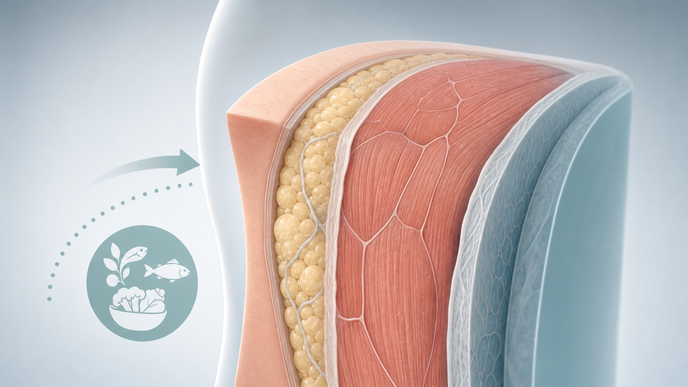
- Whole-body and trunk fat-free and muscle percentages increased, indicating a shift in relative composition rather than demonstrated absolute muscle gain.
Investigators conducted a secondary DECIDE-Children body-composition analysis involving 1180 children in a nine-month cluster-randomized intervention. Child-facing components included health education, physical activity reinforcement, and app-based BMI monitoring and feedback; school food policies and family engagement addressed children's environments. Bioelectrical impedance assessed whole-body and trunk fat, fat-free, and muscle composition. Validated questionnaires assessed changes in dietary behavior, screen time, and MVPA. Principal component analysis (PCA) derived a composite adiposity factor, PCA_1, from correlated body-composition measures. Investigators used adjusted linear mixed-effects models to examine whether the measured behavioral changes statistically mediated intervention effects on body composition.
The intervention was associated with decreases of 1% in both whole-body and trunk fat mass percentage. The composite adiposity factor PCA_1 decreased by 0.942 standard deviations (SD). Whole-body and trunk fat-free mass percentages and muscle mass percentages increased.
Changes in dietary behavior statistically mediated 16.1% of the intervention effect on PCA_1. Dietary behavior also significantly mediated effects on the other assessed body-composition outcomes. Neither screen time nor MVPA statistically mediated the reported effects. Sensitivity analyses supported the primary findings.
Statistical mediation does not isolate the effect of changing diet. Although the multicomponent intervention was cluster-randomized, changes in diet, screen time, and activity were not separately randomized, so the dietary association cannot establish a diet-only causal effect. Similarly, higher fat-free and muscle mass percentages describe relative composition: they do not establish that children gained muscle mass in absolute terms.
The authors concluded that lower adiposity and higher relative fat-free and muscle percentages accompanied the multicomponent childhood intervention, with dietary behavior serving as a statistical pathway for some of the observed effects.
Clinician Questions
Which variables were included in the DECIDE-Children body-composition mediation models?
The linear mixed-effects mediation models assessing behavioural pathways to body-composition changes among children in DECIDE-Children were adjusted for age, sex, and region.
What does a higher PCA_1 score mean in the DECIDE-Children pediatric obesity analysis?
For children in the DECIDE-Children intervention, a higher value of the principal-component-derived composite body-composition factor PCA_1 represents greater adiposity and lower muscle mass.
Recommended Reading
- For more on dietary intervention and weight: Maintaining Weight Loss: Early Evidence on Microbiome-Derived Supplementation