
De Novo GERD After Sleeve Gastrectomy Observed at 6 Months
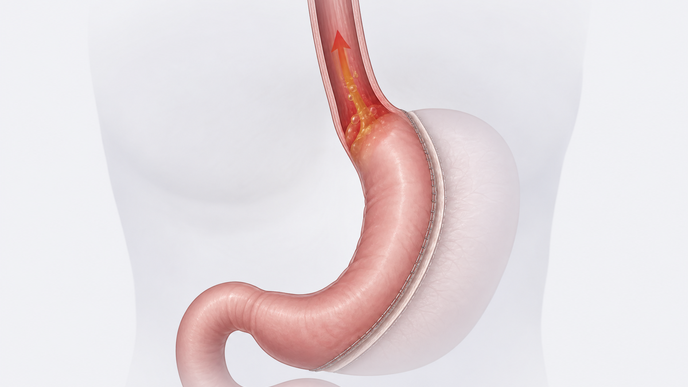
Key Takeaways
- De novo GERD developed in 16 of 60 adults (26.7%) within 6 months of laparoscopic sleeve gastrectomy in a prospective single-center case series.
- Reflux was tracked at 2, 4, and 6 months with symptom surveillance and GerdQ documentation, and among the 16 GERD-positive patients, heartburn was reported in 14 (87.5%) and regurgitation in 10 (62.5%).
- Mean BMI fell from 38.63 ± 1.53 kg/m2 before surgery to 32.08 ± 3.21 kg/m2 at 6 months (p < 0.001), while endoscopic findings among affected patients shifted toward more dilated cardia without esophagitis and less dilated cardia with esophagitis.
Adults aged 18 to 60 years with BMI at least 40 kg/m2 or at least 35 kg/m2 plus obesity-related comorbidities underwent a standardized laparoscopic sleeve gastrectomy technique and returned at 2, 4, and 6 months for reflux surveillance. Follow-up combined clinical review of symptoms with GerdQ-based documentation of symptom frequency and severity; patients with suggestive symptoms underwent upper endoscopy, and all participants had scheduled esophagogastroduodenoscopy at 6 months, with esophagitis described by Los Angeles grade. Postoperative GERD status was not significantly associated with sex, age category, or preoperative BMI class.
Among the 16 patients who developed postoperative GERD, heartburn and regurgitation were the most common reported symptoms, while chest or epigastric pain, fullness, dysphagia, and cough were less frequent. The 6-month endoscopic findings after sleeve gastrectomy showed dilated cardia without esophagitis rising from 12.5% at 2 months to 50.0% at 6 months, while dilated cardia with esophagitis fell from 75.0% to 37.5%; hiatal hernia remained uncommon and unchanged over follow-up.
BMI declined progressively across the first 6 postoperative months, consistent with early weight loss after sleeve gastrectomy. Interpretation remained bounded by the single-center case-series design, the 60-patient sample, the 6-month follow-up, symptom-based GERD ascertainment without routine endoscopic or pH testing throughout follow-up, possible confounding from 2 months of postoperative proton pump inhibitor therapy, and the absence of a control group. Within those boundaries, the study documented new reflux symptoms and evolving endoscopic findings during the early months after surgery.
Clinician Questions
What was the 6-month incidence of de novo GERD after laparoscopic sleeve gastrectomy in adults without preoperative GERD or hiatal hernia?
In this prospective case series of 60 adults with severe obesity who had no documented preoperative GERD or hiatal hernia on endoscopy, 16 patients developed de novo GERD within 6 months after laparoscopic sleeve gastrectomy, for an incidence of 26.7%.
How was new-onset GERD monitored during the first 6 months after laparoscopic sleeve gastrectomy in this cohort?
Follow-up occurred at 2, 4, and 6 months after surgery, with standardized clinical interviews for reflux symptoms at each visit, upper endoscopy for patients reporting suggestive symptoms, and scheduled esophagogastroduodenoscopy at 6 months for all participants. Symptom frequency and severity were documented with the GerdQ questionnaire.
Which symptoms were most commonly reported among patients who developed GERD after sleeve gastrectomy?
Among the 16 patients who developed de novo GERD after laparoscopic sleeve gastrectomy, heartburn was reported in 14 patients (87.5%) and regurgitation in 10 (62.5%); epigastric or chest pain and epigastric fullness each occurred in 6 (37.5%), while dysphagia and cough each occurred in 4 (25.0%).
What endoscopic changes were reported over time in patients with de novo GERD after sleeve gastrectomy?
Among the 16 GERD-positive patients, dilated cardia without esophagitis increased from 2 of 16 (12.5%) at 2 months to 8 of 16 (50.0%) at 6 months, while dilated cardia with esophagitis decreased from 12 of 16 (75.0%) to 6 of 16 (37.5%); hiatal hernia remained 2 of 16 (12.5%) at each assessment.