
Continuous Bilateral Erector Spinae Plane Block in Lumbar Spine Surgery
Key Takeaways
- Continuous bilateral erector spinae plane block was associated with lower postoperative pain scores and a longer delay before rescue analgesia during the first postoperative day.
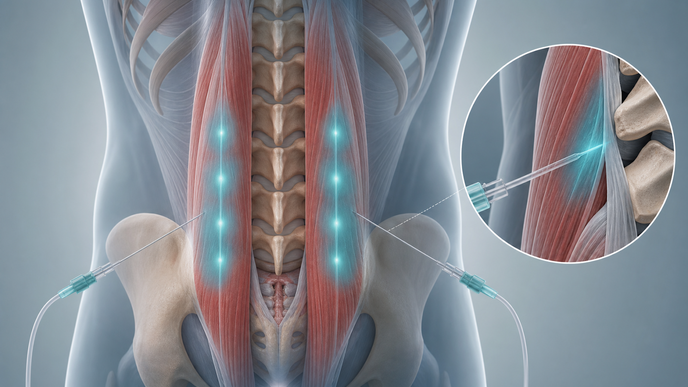
- The randomized comparison evaluated ultrasound-guided bilateral continuous erector spinae plane block with ropivacaine infusion against standard multimodal analgesia alone.
- The block group also had earlier ambulation, shorter hospital stay, and higher satisfaction, with no motor weakness or serious block-related complications reported.
In a randomized lumbar spine surgery trial, adults receiving continuous bilateral erector spinae plane block used 151 ± 16.6 µg of fentanyl over 24 hours, versus 393.6 ± 49.0 µg with standard multimodal analgesia alone. The prospective, double-blind comparison enrolled 70 ASA I–II adults undergoing elective lumbar spine surgery. Lower pain scores and a longer time before rescue analgesia accompanied the lower first-day opioid use. Overall, the block was associated with better immediate postoperative analgesia during the first 24 hours.
The study used a prospective, randomized, double-blind design in 70 adults with ASA physical status I–II who underwent elective lumbar spine surgery under general anesthesia. The control group received standard multimodal analgesia alone, while the intervention group received ultrasound-guided bilateral continuous erector spinae plane block. The protocol used a 0.25% ropivacaine bolus followed by 0.125% ropivacaine infusion at 10 mL/h per side, and the infusion continued for 24 hours. Postoperative pain after lumbar spine surgery is often severe, and opioid-based analgesia carries adverse effects, providing the context for these comparisons.
Pain was assessed with visual analog scale scores at rest and during movement at predefined postoperative intervals up to 24 hours. Scores were significantly lower in the erector spinae plane block group at every measured time point. Time to first rescue analgesia was 12.83 ± 0.88 hours with the block and 3.89 ± 0.65 hours with control, with p < 0.001. The separation in analgesia persisted across the observed first-day window.
The opioid-sparing endpoint followed the same direction during the first 24 postoperative hours. Total fentanyl consumption was 151 ± 16.6 µg in the block group and 393.6 ± 49.0 µg in the control group, with p < 0.001. Earlier ambulation, shorter hospital stay, and higher patient satisfaction were also observed in patients who received the block. These recovery-related findings accompanied lower opioid exposure during the same first postoperative day.
Safety monitoring was included among the secondary outcomes, along with recovery parameters, adverse effects, and patient satisfaction. No motor weakness or serious block-related complications occurred in either study group.