
Commentary Proposes Path to Cutting Plastic Waste in Dermatology Research
Key Takeaways
- Authors of a new paper argue that redesigning laboratory packaging is a feasible near-term strategy for reducing plastic waste in skin-model research without disrupting validated experimental systems.
- Replacing culture-contact plastics remains an important long-term objective but requires extensive validation to preserve sterility, reproducibility, and biological performance.
- The authors call on laboratories, suppliers, institutions, and funding agencies to incorporate sustainability metrics into procurement decisions and packaging design.
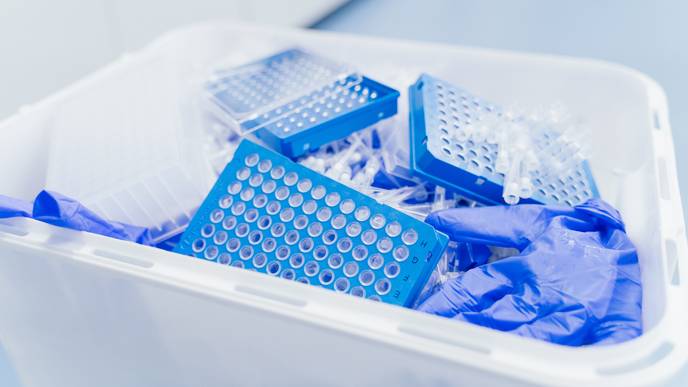
The redesign of laboratory packaging to reduce plastic waste is a feasible near-term strategy for reducing plastic waste in skin-model research without disrupting validated experimental systems, according to a commentary in the Journal of Investigative Dermatology.
The authors noted that modern skin-model research depends heavily on sterile, single-use plastics for keratinocyte and fibroblast cultures, reconstructed human epidermis, skin equivalents, and organ-on-chip systems. While replacing these materials could ultimately lessen environmental impact, they said, doing so may creates technical challenges because even minor changes to culture surfaces or materials could compromise reproducibility and biological performance.
The authors instead proposed a packaging-first strategy targeting secondary and tertiary packaging associated with commonly used laboratory consumables (including flasks, plates, pipette tips, inserts, and media). Because packaging changes do not alter validated cell-culture systems, they, the authors said, represented a realistic opportunity to reduce waste while preserving experimental integrity.
The authors also distinguished packaging reform from other sustainability approaches. While reusable products and bioplastics both depend on infrastructure, biosafety considerations, disposal pathways, and other related factors, packaging redesign, they argue, can be adopted more rapidly through measures such as reducing excess packaging, increasing recycled content, consolidating shipments, expanding refill programs, and introducing take-back initiatives for shipping materials.
To support these efforts, the authors encouraged laboratories to begin tracking procurement metrics such as packaging weight, recyclability, number of packaging components, and delivery frequency. They also suggested normalizing these measures as a routine part of purchasing decisions alongside cost, quality, and product performance.
"Broad replacement of conventional culture plastics should be regarded as a strategic objective rather than an immediate operational solution," the authors wrote. "This is not an argument for inaction. Rather, it is an argument for prioritization. If the goal is to achieve measurable reductions in laboratory plastic waste now, then the first interventions should target those parts of the plastic burden that can be changed without jeopardizing experimental integrity."
Source
Dusko I, et al. Journal of Investigative Dermatology. 2026. Doi:10.1016/j.jid.2026.05.018