
Combined Radiofrequency and Muscle Stimulation Improves Facial Wrinkles in Randomized Trial
Key Takeaways
A prospective randomized controlled trial found improvements in facial wrinkles and overall aesthetic appearance following combined radiofrequency (RF), microneedle radiofrequency (MNRF), and dynamic muscle stimulation (DMSt).
All treated participants demonstrated improvement on the Global Aesthetic Improvement Scale (GAIS), compared with no improvement among untreated controls (P < .001).
Improvements persisted through 6 months, although some attenuation occurred over time. Reported adverse events were mild and transient.
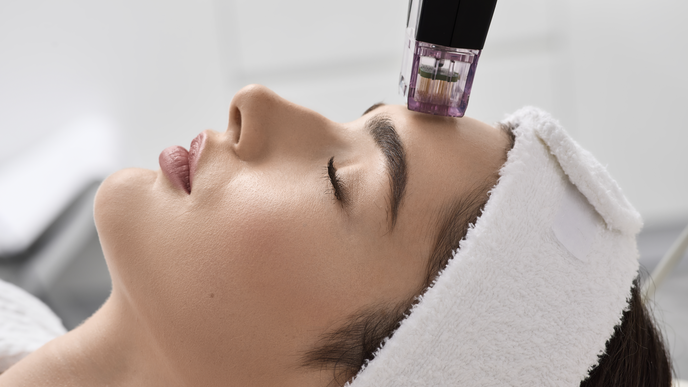
An integrated treatment combining radiofrequency (RF), microneedle radiofrequency (MNRF), and dynamic muscle stimulation (DMSt) significantly improved facial wrinkles and overall aesthetic appearance in patients with moderate-to-severe facial wrinkles, according to findings from a prospective randomized controlled trial published in Dermatologic Surgery.1
The study, led by Chen Yu and colleagues at Xijing Hospital, Fourth Military Medical University, in China, evaluated the efficacy and safety of a multimodal approach designed to address facial aging across multiple tissue layers, including the skin and underlying musculature.
Facial Rejuvenation Outcomes Sustained Through 6 Months
Participants with moderate-to-severe facial wrinkles underwent 3 treatment sessions at 1-month intervals using a device integrating RF, MNRF, and DMSt. Investigators assessed clinical outcomes, aesthetic improvement, patient satisfaction, and adverse events during follow-up, comparing treated participants with untreated controls.
Significant improvements in facial wrinkles and overall appearance were observed at 1, 3, and 6 months following the treatment series.
All treated participants demonstrated improvement on the Global Aesthetic Improvement Scale (GAIS), whereas untreated controls showed no improvement (P < .001). Scores on the Fitzpatrick-Goldman Wrinkle and Elastosis Scale (FWES) also improved, alongside patient-reported satisfaction.
Although investigators observed some attenuation of treatment effects at later follow-up visits, aesthetic outcomes remained superior to those of untreated controls through 6 months.
The combined treatment demonstrated a favorable short-term safety profile, with reported adverse events described as mild, transient, and well tolerated.
"The combined RF, MNRF, and DMSt approach achieves significant, albeit partial, improvement with a favorable safety profile by targeting both skin and underlying musculature," the authors concluded.
1. Yu C, Wang Y, Kang H, et al. Multimodal facial rejuvenation using integrated radiofrequency, microneedle radiofrequency, and dynamic muscle stimulation: a prospective randomized controlled trial. Dermatol Surg. doi:10.1097/DSS.0000000000005349