
CAR-Like Tregs Suppress Allergic Asthma in Mice
Key Takeaways
- In birch pollen-sensitized mice, transfer of CAlleR Tregs was associated with less allergic inflammation, less mucus production, and better lung function after allergen re-exposure.
- In previously unexposed mice, receipt of CAlleR Tregs before allergen challenge was associated with an absence of later asthma symptoms.
- Persistence, stability over time, and the best way to implement the approach still require further study.
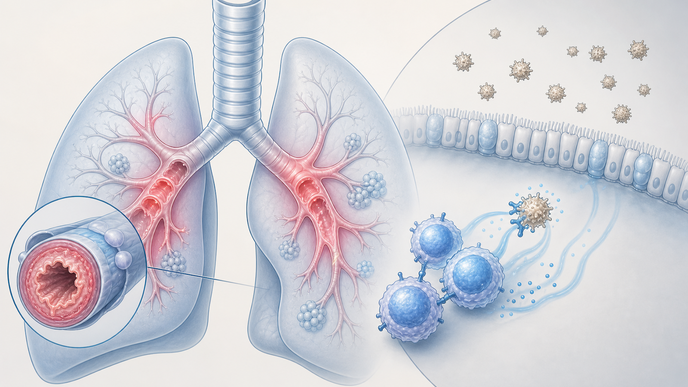
Investigators engineered regulatory T cells with chimeric allergen receptors that recognize a birch pollen component, extending cell-engineering concepts into allergen-specific immune suppression. The design aimed to give otherwise broadly suppressive cells a defined and allergen-specific target for activation. The receptors were built from antibodies isolated from a birch-allergic patient and joined to signaling domains capable of activating Treg cells. In mice already sensitized to birch pollen, transfer of these cells was associated with less allergic inflammation, less mucus production, and better lung function after allergen re-exposure than in controls.
A second experiment tested prophylaxis by giving CAlleR Tregs before birch pollen exposure to mice without prior sensitization. Those animals did not develop asthma symptoms after later challenge, compared with animals that did not receive the engineered cells. This prevention model differed from the treatment experiment by evaluating animals before sensitization. Researchers also reported a mechanism in which allergen binding, stabilized by noncompetitive antibodies, increased suppressive activity through receptor-allergen cross-linking. Together, the findings placed prevention and receptor engagement within the same mouse proof-of-concept for allergen-directed immune suppression.
The findings were published July 6 in the Journal of Experimental Medicine, and the investigators described the work as an early translational platform. Future studies, the authors said, should examine persistence, stability over time, and the best modalities for implementing the approach. They also described possible extension to other allergens, including house dust mites and certain food allergens, although the available data were limited to mice.