
BTK Inhibitor Skin Reports: Bleeding Dominates Vascular Findings
Key Takeaways
- In spontaneous safety reports involving BTK inhibitors across the United States, Canada, and Japan, vascular skin findings predominantly described bleeding rather than vasculitis.
- FAERS wound and ulcer reporting was elevated, unlike the Canadian disease-context comparison; neutrophilic findings remained exploratory.
- NMSC reporting remained elevated after FAERS disease-context adjustment and was also elevated in Canada, where a broader malignancy signal limited claims of skin specificity.
- Among reports with usable dates, bleeding-related skin findings were reported earlier than cutaneous malignancy.
Investigators conducted a retrospective analysis of spontaneous safety reports from the United States, Canada, and Japan, not a cohort of treated patients. They examined ibrutinib, acalabrutinib, zanubrutinib, tirabrutinib, and pirtobrutinib when listed as primary suspects in the US Food and Drug Administration Adverse Event Reporting System (FAERS) and Canada Vigilance, and as suspect drugs in the Japanese Adverse Drug Event Report (JADER) database. FAERS reports ran from the first quarter of 2016 through the first quarter of 2026; Canadian reports ended December 31, 2025, and JADER reports extended through the first quarter of 2026. Investigators deduplicated reports and assessed a prespecified 14-category skin-morphology panel, malignancy and severe-reaction controls, and both the full reporting background and a mutually exclusive comparator involving 19 other hematologic-oncology medicines that excluded BTK-inhibitor reports. Analyses included adjusted models and Evans disproportionality criteria. Timing analyses required treatment-start and event-onset dates and excluded events predating treatment. Exclusion of chronic graft-versus-host disease reports and comparisons involving recognized severe-reaction culprit drugs served as sensitivity and control analyses.
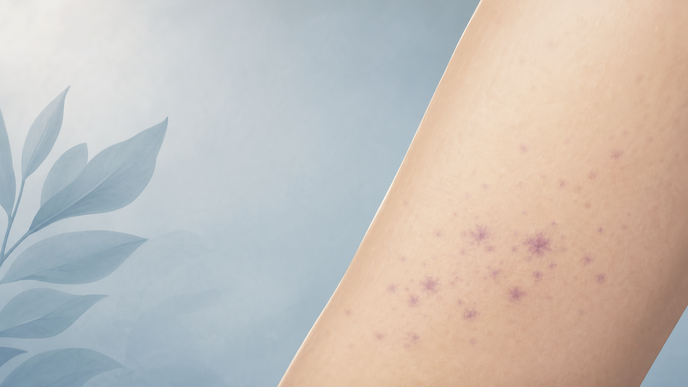
Vascular-cutaneous events in FAERS showed disproportionate reporting against the full background, with a reporting odds ratio (ROR) of 7.97 (95% confidence interval [CI] 7.43–8.56). Bleeding without vasculitis accounted for 777 of 802 vascular-cutaneous reports (96.9%), including descriptions of petechiae, ecchymosis, and purpura. Cutaneous vasculitis itself was not disproportionately reported. Vascular-cutaneous reporting was also elevated in Canada and JADER, and the FAERS association persisted against the disease-context comparator. These findings concern reported terms rather than confirmed skin diagnoses.
FAERS wound and ulcer reporting met Evans criteria and remained elevated against the disease-context comparator. Canadian wound and ulcer reporting was elevated against the full background but not the disease-context comparator: ROR 0.60 (95% CI 0.38–0.94). Neutrophilic-core and pyoderma gangrenosum findings were post hoc, unadjudicated, and uncorrected for multiple comparisons; they do not establish a cause of ulcers. For non-melanoma skin cancer (NMSC), the adjusted FAERS disease-context odds ratio (OR) was 1.54 (95% CI 1.39–1.71). Canadian NMSC reporting was also elevated, but so was the Canadian all-second-primary-malignancy control, limiting skin-specific interpretation. Among date-eligible reports, median reported onset was 34 days (1.1 months) for petechiae, ecchymosis, or purpura versus 284 days (9.3 months) for any cutaneous malignancy; these are reporting times, not established biological latencies. BTK inhibitors combined with recognized culprit drugs did not show greater disproportionate Stevens–Johnson syndrome/toxic epidermal necrolysis reporting than culprit-only groups, which does not exclude rare severe reactions.
RORs and adjusted ORs describe reporting odds, not incidence, individual risk, or causation. Unequal exposure and reporting prevent product-safety rankings. Indication, previous treatment, immunosuppression, baseline skin cancer risk, ultraviolet exposure, and surveillance could influence malignancy reporting; comparator choice changed the ulcer interpretation. Incomplete dates and unavailable case narratives, biopsies, and images limited diagnostic and timing assessments. Overlapping exploratory tests lacked multiplicity correction, and national reporting practices differ. The authors proposed evaluating surveillance approaches in future clinical research, not establishing a screening recommendation.
The authors identified three reporting domains: earlier bleeding-related skin events, comparator-sensitive wound and ulcer findings with exploratory neutrophilic diagnoses, and later-reported cutaneous malignancy. Longitudinal clinical research is needed to validate their occurrence and evaluate surveillance questions.
Clinician Questions
Did excluding chronic graft-versus-host disease reports change the BTK inhibitor skin-signal findings?
In the US FAERS analysis of BTK inhibitor cutaneous reports, excluding reports involving chronic graft-versus-host disease did not materially change the principal adjusted associations. This sensitivity analysis addressed a potential indication-related influence on the reported skin patterns.
Did tirabrutinib show vascular-cutaneous reporting in the Japanese JADER database?
Japanese JADER suspect-drug reports involving tirabrutinib showed disproportionate vascular-cutaneous reporting, predominantly subcutaneous hemorrhage. Tirabrutinib was scarcely represented in US FAERS, and the descriptive Japanese signal cannot establish comparative safety among individual BTK inhibitors.
This content is intended for healthcare professionals for educational purposes. The article and its image were developed with AI assistance and reviewed by members of the ReachMD team prior to publication. Please refer to the original source linked for the complete and most up-to-date information.