
Breast Milk HMOs Shape the Weaning Gut Microbiome
Key Takeaways
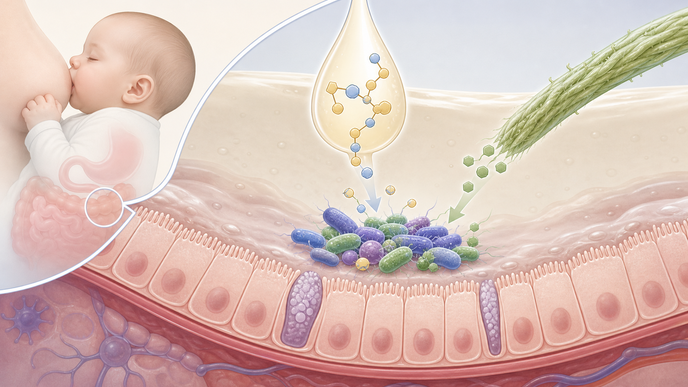
- Human milk oligosaccharides in breast milk were reported to influence which gut bacteria thrive during the transition to solid foods, with that microbiome effect described as persisting later in life.
- Bacteria able to metabolize both human milk oligosaccharides and plant-derived dietary fibers were presented as gaining a competitive advantage during weaning.
- The work combined tracking of changes in gut bacteria and bacterial genes across weaning with gut-like laboratory culture experiments, with weaning framed as a developmental window for maturation toward an adult-like microbial community.
The paper describes a collaboration between DTU and Rigshospitalet said investigators examined how gut bacteria and their genes changed across the weaning phase, then paired those observations with laboratory cultures under gut-like conditions to identify organisms capable of using both HMOs and dietary fibers. The laboratory work linked ecological change in the infant gut to substrate-use capacity rather than to a simple shift in food exposure alone. In that framing, dual HMO-fiber utilization functioned as the reported competitive edge during weaning.
The authors presented weaning as a crucial developmental window tied to maturation toward a stable adult-like gut microbial community. They framed the findings as a way to understand how breast milk and solid foods may jointly shape microbial succession, while any longer-term nutritional or preventive implications remained future-facing interpretation rather than demonstrated clinical outcomes. The report discussed microbiome composition, bacterial genes, and substrate-use capability, not clinical endpoints or quantitative outcome measures. The reported pattern was that HMOs helped select bacteria best equipped to bridge breast milk feeding and fiber exposure during weaning.
Clinician Questions
How were human milk oligosaccharides linked to the infant gut microbiome during weaning?
The report says HMOs in breast milk influenced which bacteria thrived in weaning infants during the transition to solid foods, and that this HMO-linked microbiome pattern was described as persisting later in life. In the same report, dual HMO-fiber utilization was presented as the selection feature that helped shape the maturing gut microbial community, rather than a demonstrated clinical outcome.
What mechanism was proposed for dual HMO and fiber utilization in the weaning gut microbiome?
In weaning infants, bacteria able to metabolize both HMOs from breast milk and plant-derived dietary fibers were described as having a competitive advantage. The report presented that dual HMO-fiber utilization as a selection cue shaping which bacteria persisted in the maturing gut microbial community during the transition to solid foods.
What methods were reported in the Nature Communications study on HMOs and weaning gut bacteria?
The article says investigators tracked changes in gut bacteria and their genes over the weaning phase in weaning infants and also cultured bacteria under laboratory conditions resembling the human gut to identify organisms capable of dual HMO-fiber utilization. Those reported methods linked HMOs in breast milk, plant-derived dietary fibers, and the observed microbiome-selection pattern during transition to solid foods.