
Blood Flow Restriction After ACL Reconstruction Shows No Added Benefit
Key Takeaways
- No statistically significant between-group differences were seen for the primary or secondary outcomes.
- Both groups improved over time in subjective pain, maximum strength, active and passive range of motion, and IKDC scores.
- Blood flow restriction was not associated with additional clinical benefit in this study group, and the authors called for further study in other settings.
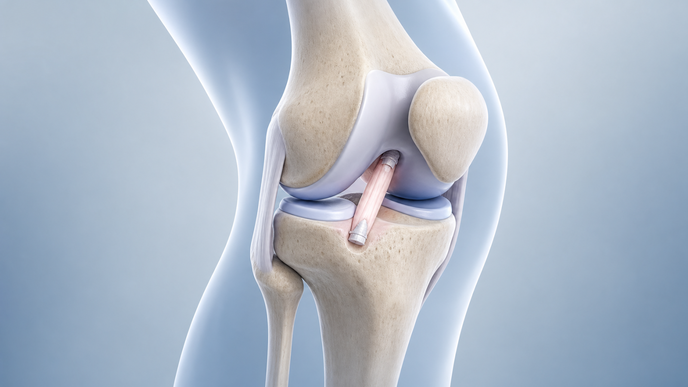
The randomized controlled trial examined early postoperative rehabilitation after primary ACL reconstruction in 30 patients, including 24 men and 6 women. Mean age was 32.3 ± 12.4 years, and all participants underwent reconstruction with a semitendinosus graft using standardized fixation techniques. Patients received low-load strength training with or without blood flow restriction, performed as four leg press sets with 30 repetitions first and 15 thereafter, twice weekly for four weeks, starting four weeks after surgery, alongside standard rehabilitation. Mixed linear models were used for analysis.
Pain perception was the primary outcome and was measured with pressure pain thresholds and a visual analogue scale for knee pain at rest and during a functional stair-climbing test. Secondary assessments included strength and functional measurements, and investigators found no statistically significant between-group differences for either primary or secondary outcomes. Time effects were seen across both groups for pain at rest, p < 0.001, pain during stairs, p = 0.003, maximum strength, p = 0.002, active extension, p = 0.035, active flexion, p < 0.001, passive extension, p = 0.029, passive flexion, p < 0.001, and IKDC scores, p < 0.001. Measures changed over time in both groups, but not differently between groups.
The investigators concluded that blood flow restriction plus low-load training was not associated with additional short-term clinical benefit versus low-load training alone in this study group. They also called for further research in specific patient subpopulations, with different training loads, or at later rehabilitation stages.