
Analysis: Black Children Show Lower Dermatology Specialty Care Use Despite Higher Disease Frequency
Key Takeaways
- Black children had higher electronic health record–derived frequencies of atopic dermatitis (AD), acne, and hidradenitis suppurativa compared with White children across 8 US children’s hospitals.
- Black children had lower proportions of dermatology specialty care use across all 5 studied conditions despite higher disease frequency, the data revealed.
- Investigators said further research is needed to determine whether these patterns reflect appropriate care use or inequities in access to dermatologic care.
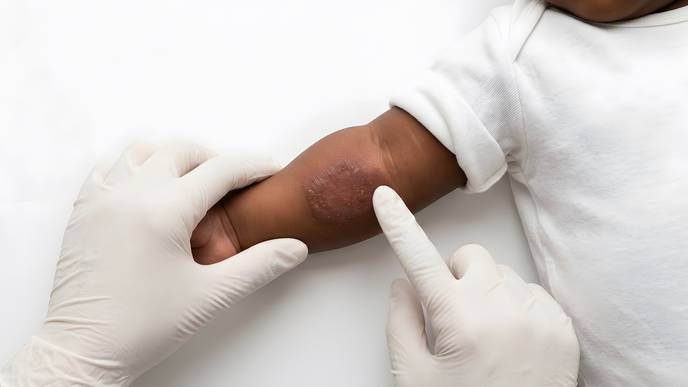
Black children had higher electronic health record (EHR)–derived frequencies of atopic dermatitis (AD), acne, and hidradenitis suppurativa compared with White children across 8 US children’s hospitals.
Investigators for the multicenter cross-sectional study used PEDSnet data from 8 US children’s hospitals to identify racial and ethnic differences in pediatric dermatologic disease frequency and specialty care utilization between 2009 and 2022. Investigators evaluated AD, acne, infantile hemangioma, psoriasis, and hidradenitis suppurativa (HS) among 536,776 pediatric patients.
Case counts included 377,970 for AD, 139,632 for acne, 54,305 for infantile hemangioma, 11,339 for psoriasis, and 5,722 for HS (mean age 6.4 years, 51.5% female). Researchers assessed disease frequency per 100,000 children and the proportion of children receiving dermatology care, stratified by race and ethnicity.
The analysis showed variation in disease frequency across racial and ethnic groups. Black children had 10,469 cases of AD per 100,000 children compared with 3,099 cases per 100,000 White children. In contrast, infantile hemangioma occurred less frequently among Black children, with 290 cases per 100,000 compared with 764 cases per 100,000 White children.
Investigators also reported that Black children had lower dermatology specialty care use across all 5 conditions despite relatively high frequencies of AD, acne, and HS. The findings suggest potential disparities in access to or utilization of dermatologic care in pediatric populations.
“In this study, across all studied conditions, Black children had a low proportion of dermatology use at participating PEDSnet US children’s hospitals, despite having high frequencies of AD, acne, and HS,” the authors wrote. “Further research is required to determine whether these patterns represent appropriate specialty care use or reflect gaps in care.”