
Baseline Imaging in ESCAPE-MeVO Linked To 90-Day Outcomes
Key Takeaways
- Baseline head CT, CTA, and CT perfusion findings were reviewed in a central blinded core laboratory analysis of ESCAPE-MeVO participants.
- CTA collateral status was associated with 90-day modified Rankin Scale outcome, and the abstract described that relationship as weak.
- Interaction testing did not show statistically significant modification of EVT effect by collateral status.
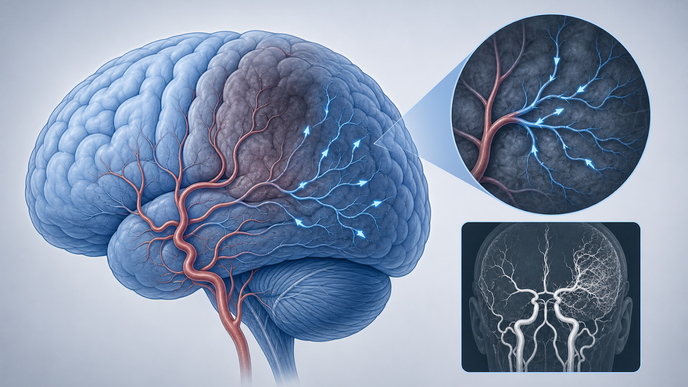
Baseline head CT, CTA, and CT perfusion characteristics, including occlusion site and collateral status, were assessed in patients with acute stroke due to medium-vessel occlusion. A central blinded core laboratory performed the imaging review, and the primary outcome was the 90-day modified Rankin Scale score. Participants were enrolled from April 2022 to June 2024, and the trial was registered as NCT05151172. Median age was 75 years, 284 participants were male, and most MeVOs were in the middle cerebral artery territory at 442 of 522 cases (84.7%). Collateral status showed the clearest imaging pattern, with good collaterals in 129 of 517 participants (25.0%), moderate collaterals in 276 (53.4%), and poor collaterals in 111 (21.5%).
Across the baseline imaging variables examined, CTA collateral status was the feature associated with the primary outcome in multivariable analysis. Other reviewed imaging characteristics were not identified as associated with the 90-day ordinal disability outcome in the abstract. Investigators concluded that CTA collateral status may have a weak association with clinical outcomes among patients with MeVO. The finding was reported as an observed association with outcome at 90 days.
To assess whether imaging characteristics modified treatment effects, researchers compared outcomes between EVT and control groups and used multiplicative interaction terms for both IVT and EVT. Among participants with poor collaterals, the adjusted probability of mRS 0 or 1 was 25% with EVT and 37% with control. Among those with good collaterals, the adjusted probability was 47% with EVT and 36% with control, according to the Radiology abstract. The EVT-by-collateral interaction was not statistically significant, with Pinteraction = .30. The abstract did not report statistically significant modification of EVT effect by collateral status.