
Autopsy Cohort Links Parkinsonian Diagnosis to Lewy Pathology
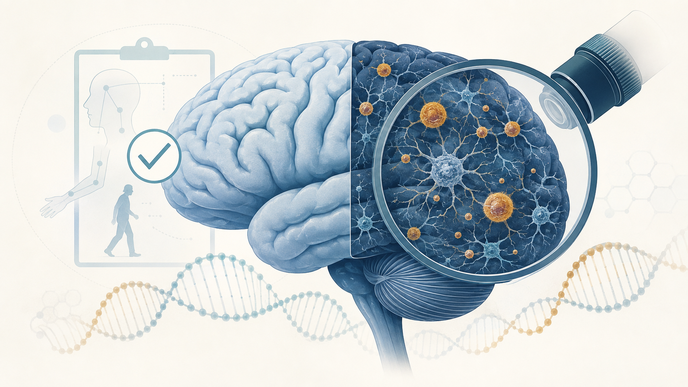
Key Takeaways
- In a global autopsy-confirmed cohort of more than 3,000 brain-bank donors, diagnostic mismatch across parkinsonian disorders remained common.
- Dementia with parkinsonism tracked more closely with Lewy body pathology at autopsy than Parkinson disease without dementia.
- Alzheimer disease copathology was present in 40% of Lewy body disease cases.
- Among cases with primary Lewy body pathology, GBA1 carrier status was associated with heavier Lewy body pathology, whereas pathogenic LRRK2 status was associated with less advanced Lewy body pathology and longer disease duration.
Investigators conducted a multicenter, retrospective, autopsy-confirmed cross-sectional brain bank study in the JAMA Neurology study of pathology and genetics in a global cohort of parkinsonian disorders, using donors enrolled from 1985 to 2024 at 11 academic brain banks in the United Kingdom, United States, and Australia. Among 5648 donors with available genetic data, 3353 were eligible for analysis across Parkinson disease (PD), Parkinson disease dementia (PDD), dementia with Lewy bodies (DLB), progressive supranuclear palsy (PSP), corticobasal syndrome (CBS), multiple system atrophy (MSA), and neurologically normal controls. Genetic characterization used the NeuroBooster array and/or genome sequencing, genes of interest were defined through the PanelAPP neurodegenerative disease panel, and ancestry was inferred genetically.
Clinicopathologic mismatch remained common across the movement disorders. Clinical diagnoses of PD, PDD, and DLB had a positive predictive value of 92% (95% CI 90.7%-93.2%) for underlying Lewy body pathology, and dementia with parkinsonism was more tightly linked to Lewy body pathology than PD without dementia (OR 1.96; 95% CI 1.30-3.04; P = 7.2 × 10⁻⁴). Mismatch was especially marked for CBS, which had the lowest PPV for underlying CBD pathology (23.7%); among clinically diagnosed MSA cases, 16.8% had primary Lewy body pathology and 6.5% had PSP pathology at autopsy; Alzheimer disease copathology was present in 426 of 1064 Lewy body disease cases (40%), with a qualitative association with more extensive Lewy body distribution.
Within primary Lewy body disease, Lewy body pathology patterns linked to GBA1 and LRRK2 status diverged. GBA1 carriers had greater Lewy body burden than cases without known pathogenic variants (OR 1.94; 95% CI 1.24-3.03; P = .01) and than LRRK2 carriers (OR 7.44; 95% CI 2.16-25.64; P = .01). In a small LRRK2 subgroup (19 carriers overall, 13 with Lewy body pathology), pathogenic LRRK2 carriers were less likely to show advanced Lewy body pathology and had longer disease duration than individuals without variants (HR 0.60; 95% CI 0.38-0.95; P = .02). Pathological diagnosis also differed across genetically inferred ancestry groups, with Lewy body pathology more common in Ashkenazi Jewish donors and PSP more common in South Asian donors; the authors reported overall ancestry differences independent of GBA1 and LRRK2 status, and specifically reported that the Ashkenazi Jewish–Lewy body association remained after excluding LRRK2, GBA1 risk, and rare-variant carriers.
Because the cohort was retrospective and based on brain bank donors, the findings do not establish causal relationships and may reflect referral, sampling, and recruitment bias. The authors noted that donors in this series had younger age at diagnosis and longer disease duration than population-based cohorts, that pathological staging was relatively coarse and may have varied across centers and pathologists, that documentation of coexisting pathologies was incomplete in some cases, and that non-European ancestry groups were comparatively small. Taken together, the findings describe how clinicopathologic mismatch, copathology, and variant-linked neuropathologic patterns coexisted in this multicenter autopsy cohort.
The researchers reported that diagnostic mismatch across parkinsonian disorders remained common in this cohort, while Alzheimer disease copathology was frequent in Lewy body disease and GBA1 and LRRK2 carrier groups showed distinct pathology-linked profiles.
Clinician Questions
Which clinical diagnoses were included in the global autopsy cohort of parkinsonian disorders?
The autopsy-confirmed cohort included donors with Parkinson disease, Parkinson disease dementia, dementia with Lewy bodies, progressive supranuclear palsy, corticobasal syndrome, multiple system atrophy, and neurologically normal controls from academic brain banks in the United Kingdom, United States, and Australia who had available genetic data.
How was diagnostic accuracy defined in the pathology study of Parkinson disease, PDD, and DLB?
Investigators compared each donor’s primary clinical diagnosis with the final neuropathological diagnosis and assessed sensitivity, specificity, positive predictive value, and negative predictive value. Lewy body diseases were grouped as a single pathological entity because distinctions among PD, PDD, and DLB are based on clinical features rather than separate pathological categories.
What genetic variants were analyzed in the Parkinsonian-disorders pathology cohort?
Genetic analyses used the NeuroBooster array and/or genome sequencing, genes of interest came from the PanelAPP neurodegenerative disease panel, GBA1 was grouped into Gaucher disease-causing variants and Parkinson disease risk variants, and the LRRK2 variants analyzed were G2019S and Y1699C. Ancestry was inferred genetically using Genotools.
How should the ancestry findings in the parkinsonian-disorders cohort be interpreted?
Pathological diagnosis differed across genetically inferred ancestry groups within this autopsy series, with Lewy body pathology more frequent in Ashkenazi Jewish donors and PSP more frequent in South Asian donors, but the authors also noted limited non-European subgroup sizes and the possibility of recruitment bias. The finding is therefore bounded to this cohort rather than a population estimate.