
Dual-Site aiTBS Reduces Suicidal Ideation in Adolescents
Key Takeaways
- Dual-site aiTBS was associated with a greater day 4 reduction in suicidal ideation than single-site left DLPFC aiTBS.
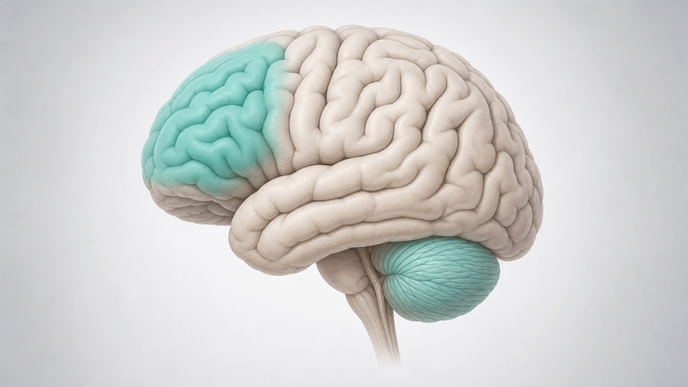
- 59 adolescents were randomized to dual-site left DLPFC plus cerebellar aiTBS or active left DLPFC with sham cerebellar stimulation, delivered in 5 daily sessions over 4 days.
- No serious adverse events were reported.
The double-blind trial was conducted at the First Affiliated Hospital of Jinan University in Guangzhou, China from September 2023 to May 2025. It randomized 59 adolescents aged 12 to 18 years, with 29 assigned to dual-site treatment and 30 to single-site treatment; the mean age was 14.78 years, and 45 participants were female. The primary outcome was change in Beck Scale for Suicide Ideation score from baseline to day 4, analyzed with a linear mixed-effects model. The protocol used 5 daily sessions over 4 days, totaling 12,000 pulses at 80% of resting motor threshold. Both groups received active left DLPFC aiTBS, while the dual-site arm also received active left cerebellar stimulation and the comparison arm received sham cerebellar stimulation with the coil tilted 90 degrees.
By day 4, mean BSI scores fell by 14.34 points in the dual-site group and 9.40 points in the single-site group. Separation was observed from the first treatment day, and daily trajectories were tracked for BSI, C-SSRS, BDI, MADRS, and BHS. Suicidal ideation response rates were 59% versus 37%, and remission rates were 48% versus 30%, but those between-group differences were not statistically significant.
After treatment, depression response favored dual-site aiTBS at 72% versus 43%, and depression remission favored dual-site at 45% versus 20%. At 1 month, between-group effects were not significant for BSI or BDI. Change in hopelessness favored the dual-site group at 1 month, with a between-group difference of 3.84 points, 95% CI 1.27 to 6.42, and P=.004. Overall, the findings showed a stronger short-term signal than the more limited 1-month results.
No serious adverse events were reported in either group. The most common events were pain at stimulation sites and dizziness, and these generally resolved within about 30 minutes after treatment ended. Exposure-based counts were 14 pain events in 456 exposures and 10 dizziness events in 228 sessions, with no significant between-group difference in adverse event rates.
Authors cited the single-center design, limited sample size, absence of a dual-site sham group, and concomitant pharmacotherapy as key limitations, and called for larger multisite validation.