
AI Beauty Tools May Favor Narrower Facial Aesthetic Standards: Supplement
Key Takeaways
- AI tools increasingly shape facial aesthetic standards through attractiveness scoring, image filters, generative imagery, and surgical simulations, a new review suggested.
- The review authors report that independent AI models may converge on a relatively narrow, frequently Westernized facial phenotype rather than reflect the diversity of faces considered attractive.
- For facial plastic surgeons, the authors emphasize assessing patients’ digital image environments, considering body dysmorphic disorder (BDD) screening when AI-edited reference images are presented, and critically evaluating AI-based clinical tools.
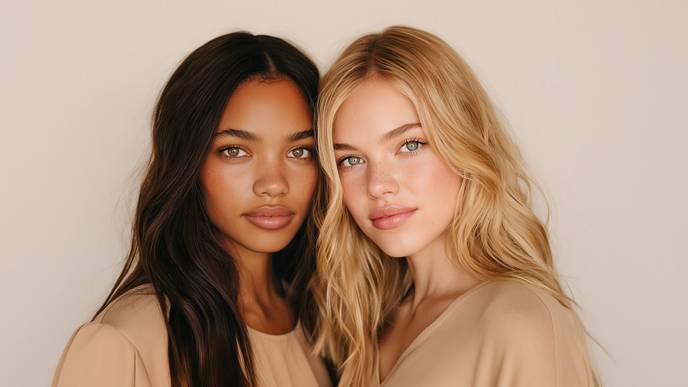
Artificial intelligence (AI) is emerging as another influence on facial aesthetic standards, potentially affecting how patients perceive attractiveness and approach cosmetic procedures, according to brief review in The Journal of Craniofacial Surgery.
The authors explored how AI systems that score, edit, generate, and curate facial images construct quantitative definitions of attractiveness. They noted the AI systems draw on rated image datasets and increasingly reach consumers through attractiveness-prediction algorithms, augmented-reality filters, generative images, and surgical-outcome simulators.
AI Beauty Standards May Narrow Perceptions of Attractiveness
According to the authors, AI-derived standards differ from traditional proportion-based aesthetic canons, which themselves have shown limited correlation with observed attractiveness. A key concern identified in the review is convergence, meaning that independent AI models may reproduce a relatively narrow and frequently Westernized facial phenotype, potentially homogenizing rather than representing diverse perceptions of attractive faces.
The review also examined evidence connecting AI-mediated and self-captured images with appearance dissatisfaction and shifts in self-perception, including phenomena described as “Snapchat dysmorphia” and “Zoom dysmorphia.” The authors distinguished these effects from optical and behavioral factors that can independently alter facial perception.
“AI is becoming an influential and largely unregulated arbiter of contemporary beauty,” the authors wrote, adding that surgeons have an interest in advocating for diverse training data, transparency, and human oversight.
Source
Ozmen B, et al. Doi:10.1097/SCS.0000000000013247