
AI-Assisted Lung Nodule Evaluation in Low-Dose CT Screening
Key Takeaways
- AI assistance was associated with higher detection of Lung-RADS-positive nodules and overall nodules, along with more follow-up low-dose CT recommendations.
- Interpretation time per examination was not significantly different between groups.
- No lung cancers were diagnosed in either group during the reported follow-up.
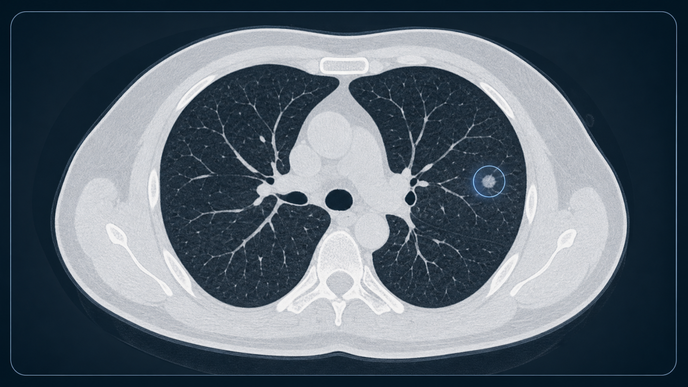
This prospective single-center, parallel, open-label clinical trial enrolled consecutive asymptomatic individuals undergoing low-dose chest CT during self-initiated general health checkups from May 19, 2025 to September 4, 2025. Participants underwent 1:1 random allocation to AI-assisted interpretation or interpretation without AI. The final analysis included 911 individuals, with 447 in the intervention group and 464 in the control group, including 517 men and 394 women, with a mean age of 62 years. Ten thoracic radiologists interpreted the examinations, and the AI tool automatically detected, classified, and measured nodules with results displayed within PACS. Radiologists reported nodules only when they measured at least 4 mm.
The primary outcome, interpretation time per examination, was 187 seconds with AI assistance versus 172 seconds in the control group, with P=.23. Lung-RADS-positive nodules were detected in 16.9% of examinations with AI assistance and 10.3% without it, with P=.03. Follow-up low-dose CT recommendations occurred in 15.3% of the AI-assisted group and 7.4% of the control group, with P=.04. Investigators also observed greater overall nodule detection in the AI-assisted arm. These differences were seen in detection and follow-up recommendation rates rather than in reading time.
No individual in either group was diagnosed with lung cancer during median follow-up of 215 days in the intervention group and 216 days in the control group. The investigators concluded that PACS-integrated AI nodule evaluation was not associated with a significant difference in interpretation time and was associated with greater detection of clinically actionable nodules. Follow-up showed no lung cancer diagnoses in either trial arm.