
ACTN2 Variants in HCM Show Distinct Protein Effects
Key Takeaways
- A 2026 Nature Communications study linked 17 ACTN2 variants to hypertrophic cardiomyopathy.
- The reported ACTN2 variants altered alpha-actinin-2 through differing effects on protein stability, aggregation, and molecular interactions.
- Variant effects differed by location within ACTN2, with the actin-binding domain emerging as a hotspot, and the investigators described the framework as potentially improving interpretation of ACTN2 genetic test results in cardiomyopathies.
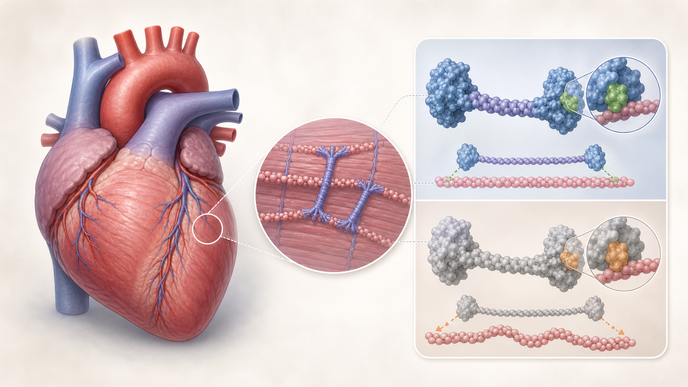
ACTN2 variants showed heterogeneous rather than uniform behavior when a multidisciplinary team of structural and cell biologists used a range of experimental methods to profile alpha-actinin-2. The collaboration included investigators from the University of Birmingham, the University of Oxford, and Research Campus Harwell and reflected the study’s structural and cellular focus. Across the variants, the authors described reduced protein stability, increased aggregation, and reduced interactions with other molecules, indicating that disruption of alpha-actinin-2 can arise through more than one pathway. Those findings framed the study as a functional map of mechanistic diversity within the same cardiomyopathy-associated gene.
Variant location within ACTN2 also appeared to shape function, with the investigators identifying the actin-binding domain as the main hotspot for functional changes. In the disease context used by the authors, hypertrophic cardiomyopathy was presented as a leading cause of sudden cardiac death worldwide, but the available details described protein-level mechanisms rather than direct sudden cardiac death outcomes, risk estimates, or follow-up. The location-dependent pattern adds context for interpreting why some ACTN2 changes may disrupt alpha-actinin-2 differently from others.
Systematic experimental profiling was described by the investigators as a framework that could improve classification of ACTN2 variants and interpretation of ACTN2-associated genetic test results in cardiomyopathies. They also presented adaptation of the approach to other heart proteins as a possibility rather than a demonstrated clinical effect. The reported advance was a more granular mechanistic basis for variant classification and genetic test interpretation in ACTN2-associated cardiomyopathy.
Clinician Questions
What protein-level effects were reported for ACTN2 variants in hypertrophic cardiomyopathy?
Investigators profiled 17 ACTN2 variants linked to hypertrophic cardiomyopathy and reported heterogeneous effects on alpha-actinin-2, including reduced protein stability, increased aggregation, and reduced ability to interact with other molecules.
Which region of alpha-actinin-2 was identified as a hotspot for hypertrophic cardiomyopathy–linked ACTN2 variants?
The actin-binding domain was identified as a hotspot for functional changes, and the reported effects differed according to where the variants were located within ACTN2.
How could ACTN2 variant profiling affect interpretation of genetic testing in cardiomyopathies?
The investigators described a systematic experimental framework intended to classify ACTN2 variants and improve interpretation of ACTN2-associated genetic test results in cardiomyopathies, presenting that framework as an aid to variant interpretation rather than as a demonstrated change in patient outcomes or management.
Did the ACTN2 hypertrophic cardiomyopathy analysis report sudden cardiac death outcomes or patient follow-up?
Hypertrophic cardiomyopathy was presented as a leading cause of sudden cardiac death worldwide, but the available report described protein-level mechanistic findings and did not provide direct sudden cardiac death outcomes, risk estimates, patient cohort size, or follow-up duration.
Recommended Reading
- For more on hypertrophic cardiomyopathy: Trientine in Hypertrophic Cardiomyopathy Phase 2 Trial