
12-Month Data Support Durability of Click-Crosslinked HA for Nasolabial Fold
Key Takeaways
- A novel click-crosslinked, non-BDDE hyaluronic acid (HLR-2) demonstrated sustained nasolabial fold improvement through 12 months.
- High responder rates (>85% at 6 months) and ≥94% patient satisfaction were reported across study populations.
- Safety profile was favorable, with only mild, transient injection site reactions and no serious or delayed adverse events.
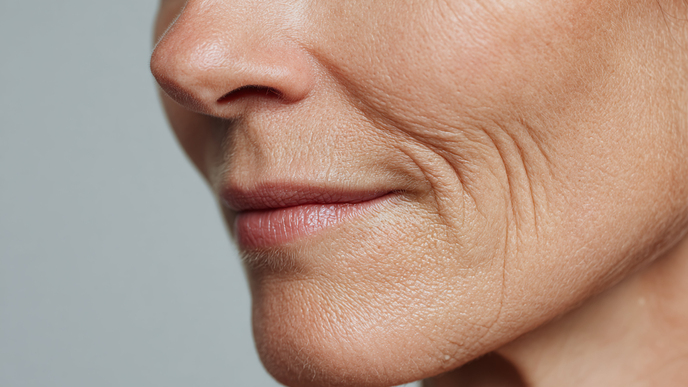
A novel long-chain hyaluronic acid (HA) filler utilizing click-chemistry crosslinking demonstrated sustained efficacy and a favorable safety profile for nasolabial fold (NLF) correction in 2 prospective studies published in the Journal of Cosmetic Dermatology.
Traditional HA fillers are typically crosslinked with 1,4-butanediol diglycidyl ether (BDDE) and formulated with high HA concentrations and shorter chain lengths, which may increase gel stiffness and immunogenicity. The investigational product, HLR-2 (Hallura), was designed to preserve long-chain HA structure with minimal chemical modification and lower HA concentration, with the goal of improving tissue integration and aesthetic outcomes.
Investigators conducted 2 open-label studies in Europe and Israel, enrolling 62 total participants (n = 33 and n = 29, respectively) who received HLR-2 injections for NLF correction and were followed for 12 months. Efficacy endpoints included the Wrinkle Severity Rating Scale (WSRS), Global Aesthetic Improvement Scale (GAIS), and patient satisfaction scores. Safety assessments included adverse events (AEs) and injection site reactions (ISRs).
At 6 months, responder rates reached 90.7% in the Israeli cohort and 86.4% in the European cohort, with improvements maintained through 12 months. Patient satisfaction remained consistently high, exceeding 94% at all time points. ISRs were mild and transient, and no serious or delayed-onset AEs were reported. Investigators also noted favorable biologic effects, including collagen and elastin induction and improved tissue integration.
“HLR-2 demonstrated high efficacy, high patient satisfaction, and a favorable safety profile over 12 months,” the authors wrote. “The product's distinctive composition and clinical performance support its use for aesthetic indications, with potential for broader therapeutic applications.”