
Transcript
Welcome to DataPulse from ERA 2025. This activity, titled “Topline Results of the CONFIDENCE Trial” is provided by Medcon International.
Dr. Agarwal:
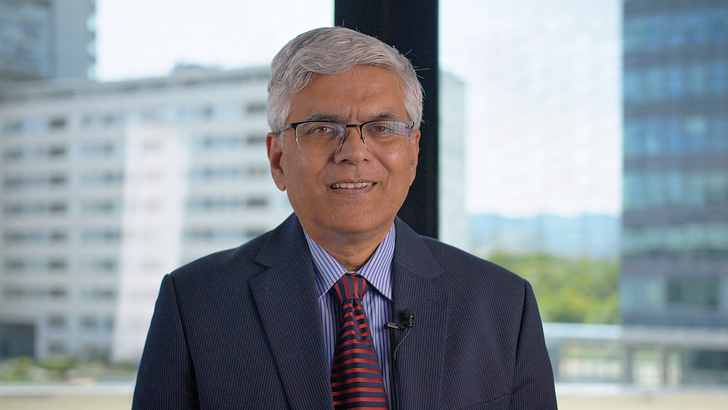
Hi, I'm Dr. Rajiv Agarwal, professor emeritus of medicine, Indiana University School of Medicine, and staff physician at the VA Medical Center in Indianapolis, Indiana, USA. I'm here joining you live from Vienna ERA 2025, and I’ll tell you about the results of the CONFIDENCE trial.
Before I tell you the results, I'll tell you why we did this study. So we have 2019 approval of SGLT2 inhibitors. In 2020 we have publication of finerenone. And in 2022, we launched this study and asked the question if we simultaneously start 2 therapies which have kidney and cardioprotective effects, would the benefits be greater? And we could design a trial in which we were looking at reduction from baseline in albuminuria from day 0 to day 180, and we powered the trial to look at about a 20% reduction in albuminuria in comparing either the combination with empagliflozin or a combination with finerenone, and these were the 3 groups where approximately 800 patients were randomized in 1:1:1 ratio.
After we finished the study at day 180, we withdrew the treatment and we called the patients back at day 210 to see if there's a rebound in albuminuria, and we successfully recruited about 818 patients. Eight hundred were successfully randomized in 3 groups and 87% of the patients completed the study.
What we found was something which was beyond our expectations. 52% relative risk reduction in albuminuria from baseline to day 180 in the combination group, compared to about a 29% reduction with empagliflozin and 32% reduction with finerenone. And each of the differences between empagliflozin and combination and finerenone and combination was statistically significant at a very small P value of less than 0.0001.
So we proved that the efficacy is good. Then we said that, is it safe? And we discovered that when we look at hyperkalemia, the risk of hyperkalemic episodes is reduced between 18% to 19% when we use the drug in combination compared to finerenone alone.
We also find that there is a reduction in blood pressure in the combination group compared to either 1 of those 2 drugs, but these reductions in blood pressures are reversible.
Somewhat of – might be of concern to primary care physicians is drop in GFR. There's a mean drop in eGFR within about 14 to 30 days; about 6 mL. But this GFR is not durable. After stopping the drug at Day 180, the GFR returns to baseline. The acute kidney injury events are few: 5 in the combination and 3 in the finerenone group, none in the empagliflozin group.
So what we show together is that this combination therapy from the get-go, from the start of starting both medications on the same day, is safe and effective in reducing albuminuria and also reduces the risk of hyperkalemia in those people who are getting the combination therapy.
So hopefully this will change the way we prescribe these medications. And I hope that you enjoyed the presentation.
This is Dr. Rajiv Agarwal, again, live from Vienna. Thank you for your attention.
Thank you for listening to this DataPulse from ERA 2025. This activity is provided by Medcon International Thank you for listening.

