Transcript
Announcer:
You're listening to GLC on ReachMD. This activity, titled EHA 2026: Sonrotoclax Plus Zanubrutinib in Frontline CLL, is provided by Medcon International.
Dr. Cheah:
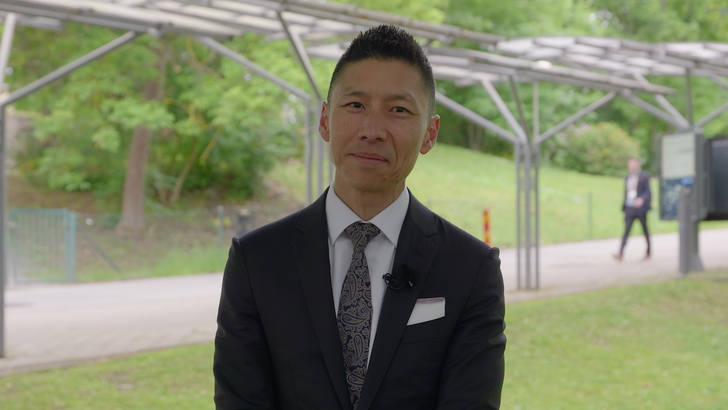
Hi, my name is Professor Chan Cheah from Sir Charles Gairdner Hospital and Linear Clinical Research in Perth in Western Australia. I'm really happy to be here at EHA in Stockholm, where I'll present the phase 1/1b data of the combination of sonrotoclax and zanubrutinib in patients with CLL that have previously not received therapy, and this is the medium-term update of the results.
Sonrotoclax is a second-generation BCL-2 inhibitor. It is more selective and potent than the first-generation agent, venetoclax. And in this trial we have treated a range of patients with B-cell malignancies with sonrotoclax plus or minus zanubrutinib and/or obinutuzumab. So, in this particular presentation I focus on the treatment-naive group of patients with chronic lymphocytic leukemia who received combination therapy with sonrotoclax and zanubrutinib, which are both oral agents.
In this trial, we've treated 137 patients with CLL at one of two doses, either 160 or 320 mg of sonrotoclax. The treatment was given with a lead-in with the BTK inhibitor zanubrutinib for 8 to 12 weeks, followed by ramping of the sonrotoclax to a target dose of either 160 or 320 mg. There was the ability for patients to electively discontinue therapy after 96 weeks at the target dose, and approximately 69% of patients did so.
In this study, the median age of patients was relatively young. The number of patients who had TP53 mutations was at about 13%, and the majority of patients, just under 60%, had unmutated IGHV, so a number of high-risk molecular characteristics.
And the response rates that were observed in this study were actually very favorable. All patients responded, so the overall response rate was 100% in both the 160- and the 320-mg cohorts, with a complete response rate of 46% and 40%, respectively, in the two cohorts.
I think more encouragingly in CLL, the rates of undetectable measurable residual disease, or MRD, 4, as measured by flow cytometry, was high. And this MRD negativity was attained early, and it increased with time, such that the vast majority of patients became MRD negative by the time they'd been on combination therapy for 12 months. The rate of MRD negativity by next-generation sequencing was 87%, and these deep responses are highly encouraging for a first-line CLL regimen.Safety on this study was encouraging. The adverse events that were seen most frequently were neutropenia, and although a number of these events were grade 3 or higher, the rates of febrile neutropenia were very low. COVID-19, bruising, were the next most frequently observed adverse events, but these were typically mild, grade 1 or 2 in severity.
Progression-free survival at this stage looks encouraging, with a median follow-up of 34 months, so just under 3 years in the 320-mg cohort. The 24-month PFS rate is 100%, so no patients have experienced disease progression. There has been a single event in the 160-mg cohort, and no patients in the 320-mg cohort have converted from MRD negative to MRD positive.
So, in conclusion, this is an all-oral second-generation combination of a BCL-2 inhibitor and a covalent BTK inhibitor, which look to have encouraging efficacy and manageable safety with deep responses and high rates of MRD negativity in an otherwise treatment-naive CLL population, including those with high-risk molecular features. And the combination is being taken forward into a number of phase 3 studies in CLL and mantle cell lymphoma.
Thanks very much for your attention.
Announcer:
You've been listening to GLC on ReachMD. This activity is provided by Medcon International. Thank you for listening.