
Transcript
Dr. Heerspink:
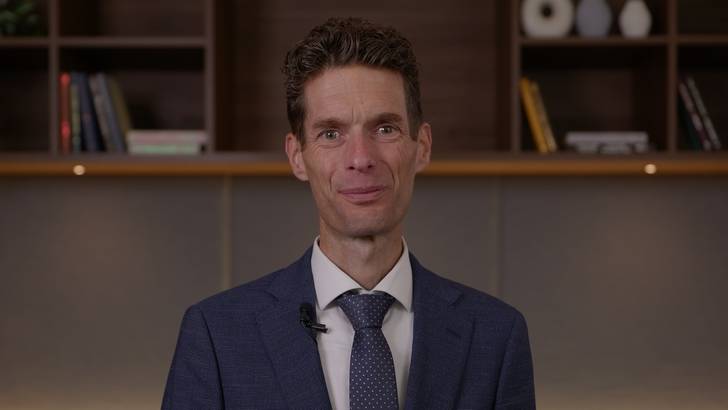
Hello everyone. Here’s Hiddo Heerspink, Clinical Trialist from the University of Groningen in the Netherlands. I am here at the European Renal Association meeting in Glasgow, where we just presented the results of the FIND-CKD clinical trial.
FIND-CKD was an international randomized, placebo-controlled clinical trial that assessed the effects of the nonsteroidal mineralocorticoid receptor antagonist finerenone in patients with chronic kidney disease without diabetes. The trial was designed to assess the effects on the primary endpoint, the eGFR slope, and its secondary endpoint, a composite clinical endpoint of 57% GFR decline, kidney failure, heart failure hospitalization, or cardiovascular death.
The trial duration was about 3 years. And during these 3 years, eGFR declined annually by 4 mL per minute in the placebo group, indicating that the patients that were recruited into the FIND-CKD trial were at high risk of kidney failure. Finerenone reduced the GFR decline to 3.3 mL per minute, thus a difference of 0.7 mL per minute per year, which was statistically significant.
This benefit on the eGFR slope translated into a clinical benefit. The risk of kidney failure, 57% GFR decline, heart failure hospitalization, or cardiovascular death was reduced by 23% with finerenone. Thus, the trial met its primary and secondary endpoint.
Finerenone was also safe and effective in these patients. Adverse events were not different between the finerenone and placebo groups. There was a modestly higher rate of hyperkalemia-related adverse events in the finerenone group compared to placebo, but the clinical impact of these adverse events was minimal. Very few led to treatment discontinuation. None led to death.
So overall, finerenone is now a new therapeutic option for patients with chronic kidney disease who are at high risk of kidney failure. And I'm just very excited about these results, and I hope that clinicians in clinical practice will now also consider finerenone for their patients with chronic kidney disease.
I thank you for listening. This was Hiddo Heerspink from Glasgow.


