
Transcript
Opening:
You’re listening to GLC on ReachMD. This activity, titled ‘Plo-ZA-siran for Severe Hypertriglyceridemia: 12-Month Results From the SHASTA-3 and SHASTA-4 Trials at ESC,’ is provided by Global Learning Collaborative.
Dr. Watts:
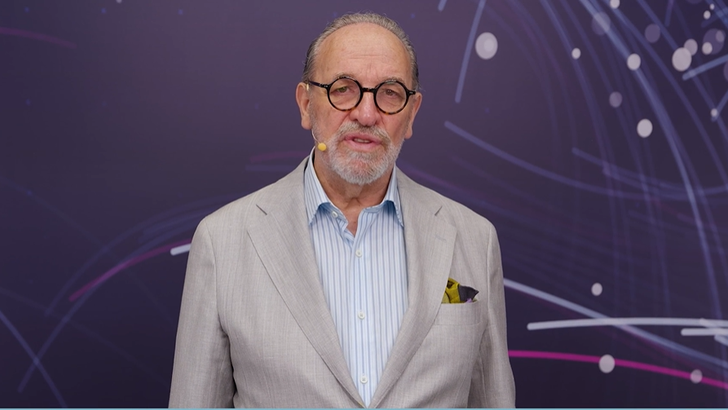
Hello, I'm Gerald Watts. I'm here at the ESC Munich, and I've just presented the SHASTA-3/SHASTA-4 trials, 2 trials that have assessed the impact of plozasiran on plasma triglycerides in patients with severe hypertriglyceridemia, and the trials together have shown that administration of plozasiran every 3 months reduced the plasma triglycerides in this high-risk group of patients and acute pancreatitis against background conventional dietary therapy and drug therapy, including statins and fibrates.
So the triglyceride reductions were of the order of 80%. They were seen rapidly, and they were sustained over 12 months. And this led to an associated reduction in acute pancreatitis of 80%, really. Importantly, over 90% of patients on plozasiran achieved triglycerides below 5.6 mmol/L or 500 mg/dL, and over 50% achieved triglycerides well below the normal range at 1.7 mmol/L, or 150 mg/dL. So a very effective treatment where half the population were returned to normal triglyceride levels.
Now, in a subgroup analysis, that was a secondary endpoint, plozasiran reduced acute pancreatitis across the triglyceride spectrum, including high-risk subgroups with a previous history of acute pancreatitis. There were no new safety signals identified, consistent with the prior evidence that we've seen in previous trials with plozasiran and their respective open-label extensions.
So the summary is that the trials support the value of APOC3-targeted therapy with plozasiran for preventing acute pancreatitis and severe hypertriglyceridemia. So this now provides, as it were, a solution to a gap in care of patients with hypertriglyceridemia of this level who have multiple comorbidities.
If approved by the regulators and there's a label and it's in clinical practice guidelines, it should be changing, markedly changing, for clinical practice. So the next steps after that is that we have a great opportunity to set up meaningful models of care for these individuals. And what I mean by that is that we set up models that will deliver the right treatment for the right patients or patient-centric by the right doctor in the right clinical practice and in a timely manner to prevent pancreatitis, either initially or recurrent pancreatitis.
And this is all consistent with good quality care, which is what we're all about.
Thank you.
Closing:
You have been listening to GLC on ReachMD. This activity is provided by Global Learning Collaborative. Thank you for listening!

